
Email Id: sale@adctooling.com
Choosing among the 10 Best Pharmaceutical Grade Activated Carbon Manufacturers requires more than comparing prices or catalog claims. Pharmaceutical production demands controlled materials, consistent pore structure, and complete batch traceability. A supplier may offer attractive specifications, yet still fall short on documentation, supply stability, or change-control discipline.
Dr. R. C. Bansal, an activated-carbon researcher and author, explains, “Adsorption is a surface phenomenon.” That short statement carries practical weight. Surface area, pore-size distribution, ash content, moisture, and chemical purity can influence filtration performance. In a manufacturing plant, these differences appear in real details: slower flow through a filter bed, darker-than-expected process liquid, or inconsistent impurity removal between batches.
This guide examines manufacturers through a pharmaceutical lens. It considers raw-material control, GMP-aligned production, pharmacopeial testing, extractables data, microbial controls, packaging integrity, and technical support. Certificates alone are not enough. They must match the delivered lot.
Some manufacturers excel in powdered carbon. Others perform better with granular or acid-washed grades. A global footprint can help, but it does not guarantee responsive service. That distinction is easy to miss.
The comparison also recognizes an uncomfortable point: “best” depends on the application. A carbon designed for pharmaceutical purification may not suit a highly sensitive injectable process. Buyers should confirm regulatory expectations, validation needs, and compatibility with the target formulation before making a final decision. This is not a perfect ranking. It is a practical starting point for informed supplier evaluation, especially where product consistency, patient safety, and audit readiness cannot be compromised.
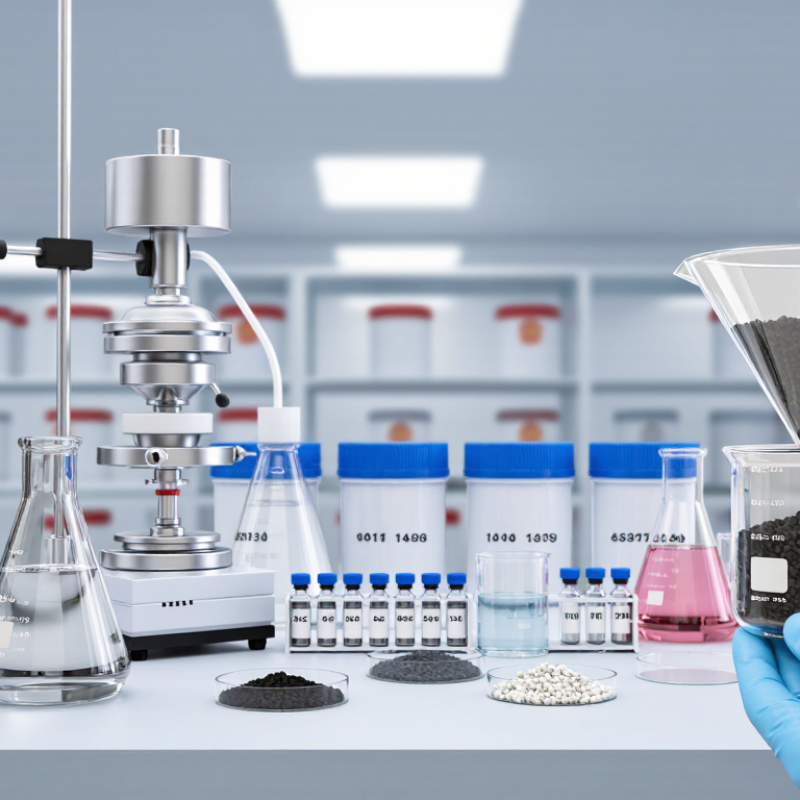
Pharmaceutical-grade activated carbon is a highly purified porous material used in carefully controlled pharmaceutical processes. It is commonly produced from selected carbon-rich materials, then activated to create microscopic pores. These pores capture color bodies, organic impurities, and unwanted odors through adsorption. It is not the same as ordinary filtration carbon. Pharmaceutical applications require tighter control of ash, heavy metals, microbial contamination, particle size, and extractable substances. Documentation matters. A dependable manufacturer should provide batch-specific certificates, traceability records, validated testing methods, and clear storage instructions. Relevant compendial requirements may include USP or Ph. Eur. standards, depending on the intended market and application.
Quality is also shaped by practical details. Powder behavior, moisture content, filtration speed, and contact time can affect production results. A carbon that performs well in one liquid may work poorly in another. Small differences in pore structure can change adsorption capacity. This is where technical experience becomes important. Manufacturers should explain activation conditions, cleaning procedures, packaging controls, and change-management policies. Independent laboratory testing can verify key specifications, although testing alone cannot replace supplier qualification. I would also examine complaint history and supply continuity. A polished certificate is useful, but it is not complete evidence. Even experienced teams can overlook a poorly defined application or an unsuitable grade. Careful trials remain necessary.
The table below provides a factual supplier-evaluation framework rather than unsupported company rankings. Pharmaceutical-grade activated carbon is activated carbon manufactured, tested, handled, and documented for use in pharmaceutical or closely regulated processes.
| No. | Manufacturer Evaluation Dimension | What Pharmaceutical Grade Means | Practical Technical Benchmark | Documentation or Evidence to Request |
|---|---|---|---|---|
| 1 | Pharmacopoeial compliance | The material is manufactured and tested against the applicable pharmacopoeial monograph or an approved customer specification. | The applicable standard may differ by market and application. Compliance should be confirmed for every supplied grade and lot. | Current certificate of analysis, specification sheet, test methods, and a written statement identifying the applicable pharmacopoeial requirements. |
| 2 | Raw-material control | The carbon source is controlled for identity, contaminants, traceability, and consistency before activation. | Common feedstocks include coconut shell, wood, and mineral or coal-based sources. The selected source should match the intended pharmaceutical process. | Approved raw-material list, supplier qualification records, origin information, change-control procedure, and batch traceability records. |
| 3 | Activation process | Activation creates a high internal pore volume that enables adsorption while maintaining controlled chemical cleanliness. | Steam and chemical activation are established industrial methods. The supplier should control activation temperature, residence time, washing, and drying conditions. | Process flow diagram, critical-process-parameter summary, validation or qualification records, and documented deviation controls. |
| 4 | Adsorption capacity | Adsorption performance should be appropriate for removing color bodies, organic impurities, toxins, or other target molecules. | Iodine number is commonly reported in mg/g and often falls within approximately 500–1,200 mg/g for commercial activated carbons; the required value is application-specific. | Lot-specific iodine number, methylene-blue or molasses performance where relevant, test method, and application-performance data. |
| 5 | Particle-size control | The particle size is controlled to provide predictable filtration, mixing, contact time, and product recovery. | Powdered grades are used for rapid batch adsorption; granular grades are used in packed beds or columns. The target distribution must be defined by the process. | Particle-size distribution, sieve analysis or laser-diffraction results, bulk density, and information about fines generation. |
| 6 | Ash and inorganic residues | Low and controlled ash helps minimize mineral carryover, extractables, and interference with pharmaceutical processing. | Ash limits vary by feedstock and specification; a lower, consistent ash level is generally preferred for sensitive pharmaceutical applications. | Ash-content results, elemental analysis where required, acid-soluble residue data, and heavy-metal or elemental-impurity assessment. |
| 7 | Moisture and pH control | Controlled moisture supports accurate weighing and stable handling, while controlled pH reduces unwanted impact on the process solution. | Commercial activated carbons commonly report moisture limits around 5–10%, but the approved value must be defined for the specific grade and use. | Moisture result, pH or aqueous-extract result, drying conditions, packaging controls, and storage-stability information. |
| 8 | Microbiological quality | The material is manufactured and packed to control bioburden and prevent unacceptable microbial contamination. | Microbial acceptance criteria depend on the intended pharmaceutical use and the applicable specification; sterilization should not be assumed unless expressly validated. | Microbial test results, environmental-monitoring summary, sanitation procedures, water-quality controls, and validated sterilization documentation when applicable. |
| 9 | Contaminant and extractables control | The product is evaluated for substances that could migrate into the process, including metals, residual processing chemicals, and other extractables. | Testing should be risk-based and aligned with the intended contact conditions, process chemistry, and regional elemental-impurity requirements. | Elemental-impurity profile, residual-chemical testing, extractables assessment, safety data sheet, and risk assessment for the manufacturing route. |
| 10 | Quality system and supply reliability | A qualified manufacturer maintains consistent production, controlled changes, complaint handling, and reliable lot-to-lot supply. | A strong supplier should provide defined batch release procedures, retained samples, change notification, and an auditable quality-management system. | Quality agreement, audit package, change-control policy, deviation and CAPA procedures, recall process, batch records, and supply-continuity plan. |
Note: Technical ranges shown above are general commercial reference points, not universal acceptance limits. Final limits should be established through the applicable pharmacopoeia, process validation, risk assessment, and approved product specification.