2026 Best M8 Pico Connector Types for Industrial Use?
Choosing the best M8 Pico Connector for industrial equipment is rarely about size alone. A connector may look right on a sensor cable, yet fail to match the device’s pin layout, coding, or installation space. A few millimeters matter. So does the mating interface.
This guide compares common M8 Pico Connector options for compact sensors, actuators, and control cabinets. It considers straight and right-angle versions, pin counts, cable exits, shielding, and environmental ratings. Check the product datasheet carefully: protection ratings can depend on correct installation and a fully mated connection. A connector’s label alone is not enough. Verify compatibility with the device and cable assembly.
An illustrative composite engineer, Lena Ortiz, captures the selection challenge: “Choose the connector for the real installation, not just the drawing.” This is an editorial line, not a verified quotation from a named industry specialist. That distinction matters. A reliable comparison should rely on manufacturer specifications and application requirements, not invented authority. Look closely at clearance beside the port, cable bend radius, expected vibration, and the number of mating cycles. Then compare each candidate against the equipment’s actual operating conditions. There may be no perfect option. A low-profile body can ease tight routing, but cable direction or service access may become awkward. The sections ahead weigh these trade-offs and identify practical connector types for industrial use in 2026.
Define M8 Pico Connectors by IEC 61076-2-104 and 3–8 Contacts
IEC 61076-2-104 covers M8 circular connectors with an M8 × 1 threaded coupling, commonly used for industrial sensors and control equipment. Their compact shells suit tight spaces, such as a sensor mounted beside a moving machine guard. The standard helps define the interface, but it does not make every connector arrangement interchangeable. Check the device documentation.
M8 connectors are available with contact counts from three to eight. Three- and four-contact versions suit many basic sensor and actuator connections; higher counts can carry additional signals, depending on the device design. More contacts do not automatically mean greater capability. Pin assignments, electrical ratings, and wiring must match at both ends.
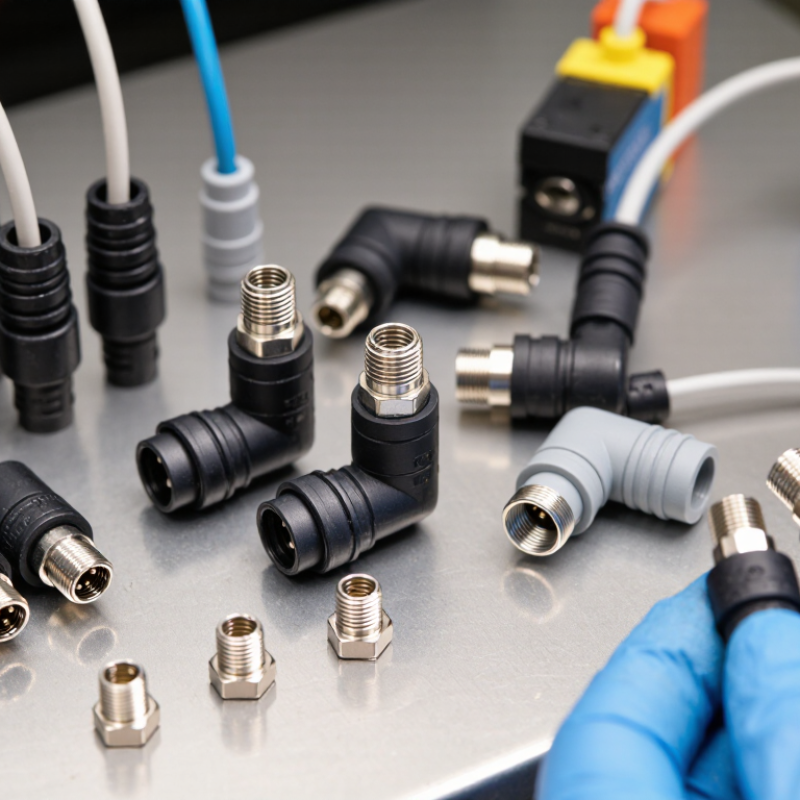
Practical types include straight and angled connectors, plus cable-mounted or field-attachable versions. Choose the orientation by looking at the actual installation: a straight plug may press against a panel, while an angled one may ease cable routing. Small detail. Check the mating face, thread, contact layout, and sealing requirements before ordering. Even a compliant M8 connector can be the wrong fit for a particular application.
Compare A-, B-, and D-Coding by Signal and Network Application
2026 Best M8 Pico Connector Types for Industrial Use?
A-coded M8 connectors are common on sensors, switches, and actuators. They carry discrete signals and, depending on the design, low-voltage power. On a machine frame, an A-coded lead might connect a proximity sensor near a moving bracket. Check the pin count and wiring diagram; matching connector size alone does not confirm compatibility.
B-coded connectors are associated with fieldbus applications, while D-coded versions are used for Ethernet communication. That difference matters when a small port must carry network data rather than a simple sensor signal. A D-coded link can connect compact equipment to an industrial network, but cable category, shielding, and network requirements still need checking. This is where selection gets messy. Coding helps prevent mismatched connections, yet pinouts and supported protocols can vary across equipment. Verify the device documentation before ordering, especially when replacing a cable in a crowded cabinet. A quick visual check is useful, not enough.
2026 Best M8 Pico Connector Types for Industrial Use: A-, B-, and D-Coding
How to read this chart: A-coded M8 connectors are commonly available with up to 8 contacts and are widely used for sensors, actuators, and general signals. B-coded versions are commonly 4-pole and are used for fieldbus connections such as PROFIBUS. D-coded versions are commonly 4-pole and support 100 Mbps Industrial Ethernet. Contact count alone does not determine compatibility; check the coding, pin assignment, and device specification.
Check Voltage, Current, and Contact Ratings Against Each Manufacturer’s Datasheet
2026 Best M8 Pico Connector Types for Industrial Use?
M8 connectors may look interchangeable, but their ratings are not. IEC 61076-2-104:2014 specifies the M8 connector interface and related performance requirements; IEC 60512 provides test methods for electrical connectors. Neither means every M8 assembly has the same voltage or current capacity. Check the exact product datasheet.
Compare rated voltage and current per contact, then check whether the figures apply at your operating temperature. A compact four-pin connector carrying sensor signals may have different limits from a version intended for power. Look for contact material, wire size, mating-cycle rating, and derating curves. A stated current can fall as ambient heat rises or multiple contacts carry load. Small details matter.
Confirm the rating for the complete configuration: connector pair, cable, pin assignment, and installation conditions. Review contact resistance and insulation data, too, especially where vibration or moisture is expected. Datasheets should identify their test conditions; without them, a headline rating is hard to apply. That extra check feels tedious. It is worth doing. The IEC standards help frame the comparison, but the manufacturer’s datasheet remains the source for the specific M8 type you plan to use.
Assess Sealing and Durability: IP67 Under IEC 60529
For industrial M8 pico connectors, IP67 is a useful starting point, not a guarantee of performance in every installation. Under IEC 60529, the first digit indicates dust-tight protection. The second indicates protection against temporary immersion, typically tested at up to one metre for 30 minutes. Check the connector’s test conditions: protection may apply only when fully mated, with the specified seal and cable installed.
Real equipment sees vibration, temperature changes, cleaning, and repeated connection cycles. These stresses can wear seals or loosen a coupling nut over time. IP67 does not establish resistance to oils, chemicals, or sustained water pressure. A connector may pass a lab test and still fail after poor cable routing or a damaged O-ring. That detail is easy to miss.
Tips: Confirm whether the rating applies when mated or unmated. Inspect seals for cuts and debris, then tighten the coupling to the specified torque. Keep a little slack near the connector to reduce strain. If immersion is expected, validate the assembled cable and socket under realistic conditions. The rating helps, but it is not the whole story.
Select the Best M8 Type by Installation Space, Environment, and Maintenance Needs
Choosing an M8 connector starts with the space around the port. A straight plug suits open panels and direct cable routing; a right-angle plug can clear a nearby guard or moving axis. Check the bend radius and tool access, not just the connector drawing. Fit matters. For dense sensor arrays, count neighboring ports and leave room to release the coupling nut. A few millimeters can decide whether maintenance is quick or awkward.
The International Federation of Robotics reported 4,281,585 industrial robots operating worldwide in 2023, up 10% from 2022, in World Robotics 2024.
That growth makes reliable sensor connections increasingly relevant, but it does not make every M8 installation identical. Choose a sealed, molded cordset where washdown, dust, or vibration is expected; confirm the stated ingress rating applies when fully mated, as defined under IEC 60529. In accessible, lower-risk locations, a field-attachable type may simplify cable replacement. It can also take longer to wire correctly. Check pin count, coding, cable jacket, temperature range, and chemical exposure against the equipment specification. I still see clearance missed on otherwise careful layouts. A short mock-up can reveal it before commissioning.