Email Id: sale@adctooling.com
Choosing the best ptfe pipe fittings from China requires more than comparing prices or polished product photos. It demands material knowledge, manufacturing evidence, and practical testing.
PTFE remains valuable because it resists many chemicals, tolerates demanding temperatures, and provides a low-friction sealing surface. Yet it is not perfect. Creep, cold flow, poor stiffness, and installation damage can affect long-term performance. Small details matter. A fitting may look smooth while hiding uneven threads or weak reinforcement.
Industry reports provide useful context. Grand View Research and MarketsandMarkets have both reported sustained growth in the global fluoropolymer market. Their figures differ because their definitions and coverage differ. That difference deserves attention. PTFE pipe fittings represent only one segment, so broad fluoropolymer data should not be treated as direct sales data.
The material’s unusual history also offers perspective. Roy Plunkett, the chemist credited with discovering PTFE, reportedly said, “I knew it wasn’t a gas.” That simple observation reflects the material’s unexpected behavior. Buyers should keep the same curiosity when assessing Chinese suppliers.
Reliable selection involves more than certificates. Check virgin or recycled PTFE content, pressure ratings, dimensional tolerances, thread quality, and batch traceability. Request test reports from recognized laboratories. Review production samples under realistic temperature and chemical conditions. Ask how the supplier controls molding shrinkage and sealing surfaces.
Some suppliers perform exceptionally well. Others rely on generic specifications. The difference can be difficult to see at first. This guide compares manufacturing capability, quality control, application suitability, documentation, and total operating value. It also acknowledges an uncomfortable truth: the cheapest fitting may become the most expensive component after leakage, replacement, or downtime.
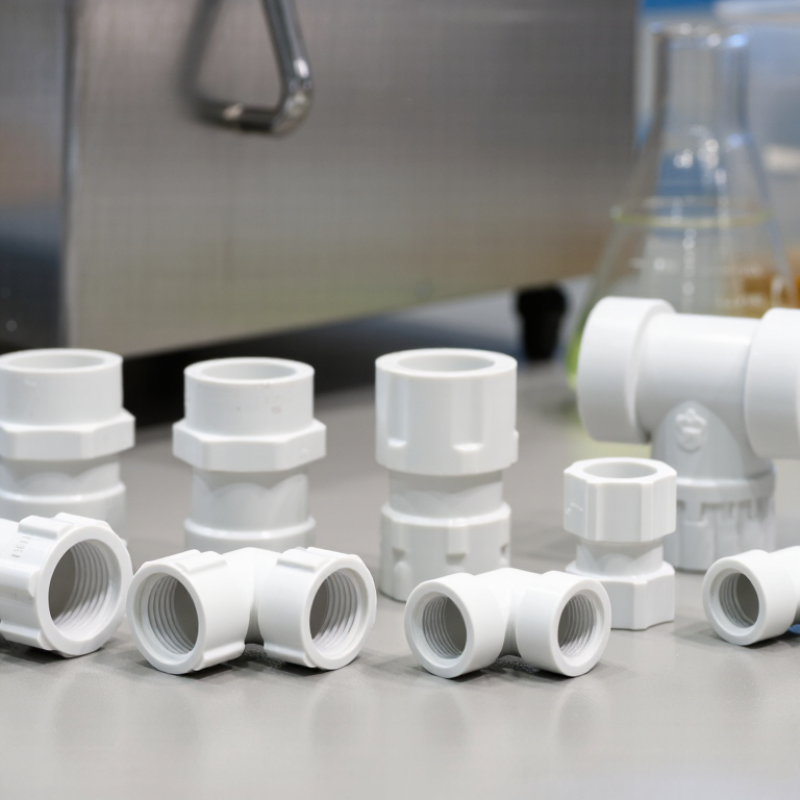
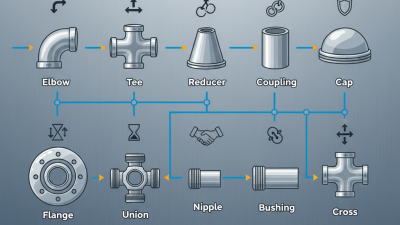
China manufactures many PTFE pipe fitting types for corrosive and high-purity systems. Straight connectors support direct pipe runs. Elbows change direction in tight spaces. Tees divide flow, while crosses serve branching layouts. Reducers connect pipes with different diameters. Unions allow quicker maintenance without cutting the line. Flanges provide firm connections for larger assemblies. Machined fittings suit custom dimensions, while molded fittings often offer stable production for repeated orders. Virgin PTFE is common for chemical resistance. Filled PTFE can improve wear resistance and dimensional stability, but its compatibility must be checked carefully.
Tips: Confirm pipe size, thread form, pressure rating, and operating temperature before ordering. Request material certificates and dimensional inspection records. A clear drawing prevents expensive misunderstandings. Ask about leakage testing for critical service.
In practical sourcing, the best fitting depends on the medium, pressure, temperature, and installation method. Acid lines may need pure PTFE, while abrasive fluids can require a reinforced grade. However, filled materials are not automatically better. Some additives reduce chemical resistance. This detail is easy to miss. Check wall thickness around threads and sealing faces, especially on small elbows and reducers. Chinese manufacturers can produce standard and custom fittings, but quality may vary between batches. Use approved samples, measurable tolerances, and traceable inspection documents. I would also review the actual assembly space, because a technically correct fitting can still be awkward to install.

The best PTFE pipe fittings from China should be judged by performance, not appearance. Start with pressure and temperature ratings for the actual service conditions. PTFE handles many aggressive chemicals, but pressure capacity decreases as temperature rises. Creep can also loosen a joint over time.
Check dimensional accuracy against the required thread or flange standard, such as ISO 7-1 or ASME B1.20.1. Threads should feel clean and uniform, without torn edges or excessive play. Measure sealing surfaces with calipers. Even a small mismatch may create leakage after thermal cycling. Ask for material certificates, batch traceability, and documented pressure-test results. A polished certificate is not proof by itself.
Chemical compatibility needs careful review. Concentration, temperature, cycling, and contamination can change the result. Reinforced PTFE may reduce deformation, but reinforcement can affect purity and flexibility. Inspect fittings under magnification for voids, cracks, and uneven molding. Test samples before approving a production order. This costs time.
Supplier reliability also matters. Confirm wall thickness, tolerances, packaging, and inspection procedures in writing. During a factory audit, compare finished parts with drawings, not photographs. I would also repeat leak testing after storage, because sealing performance can change. Some evaluations remain uncertain until real operating conditions expose weak points.
What Are the Best PTFE Pipe Fittings from China?
Leading Chinese PTFE Fitting Options for Different Applications
Chinese PTFE fittings serve chemical transfer, semiconductor rinsing, laboratory lines, and high-purity water systems. The right option depends on temperature, pressure, fluid concentration, and installation space. According to the 2024 MarketsandMarkets fluoropolymer report, the market may grow from about USD 8.4 billion in 2023 to USD 11.4 billion by 2028. That growth reflects wider demand for corrosion-resistant components.
Compression PTFE fittings suit low-pressure laboratory and sampling lines. Their simple structure supports quick maintenance. For repeated assembly, machined flare fittings usually provide better dimensional consistency. Lined PTFE fittings are more suitable for chemical pipelines, where a metallic outer layer adds mechanical support. Some Chinese manufacturers also produce conductive PTFE compounds for applications requiring controlled static discharge. Material selection matters. Standard PTFE is not automatically antistatic.
In practical sourcing, ask for resin grade, dimensional tolerances, pressure ratings, and batch traceability. Request test records for leakage, surface finish, and thermal stability. ISO 2859-1 sampling methods can help structure incoming inspection, although they do not replace application testing. The ASTM D4894 specification is commonly referenced for virgin PTFE resin quality. A catalog photo proves very little.
I would not choose the lowest quotation alone. Poor threads, uneven flares, or weak packaging can create hidden costs. One limitation remains: supplier data may describe ideal conditions, not actual service. Test a small batch with the intended fluid, temperature, and assembly torque before approving regular orders.
| Fitting Option | Typical Connection | Common Size Range | Typical Temperature Range | Typical Working Pressure | Main Advantages | Suitable Applications |
|---|---|---|---|---|---|---|
| PTFE Straight Union | Tube-to-tube; compression, flare, or threaded ends | 4–25 mm tube OD; 1/8–1 in nominal pipe size | Approximately −60°C to +200°C | Up to approximately 10–20 bar, depending on size and design | Low friction, excellent chemical resistance, easy alignment | Chemical transfer lines, sampling systems, laboratory tubing, and high-purity fluid handling |
| PTFE 90° Elbow | Female or male threaded ends; tube connections also available | 1/8–2 in nominal pipe size | Approximately −60°C to +200°C | Commonly 6–16 bar, depending on size, wall thickness, and temperature | Changes flow direction without metal-to-fluid contact | Corrosive chemical piping, semiconductor support systems, plating equipment, and compact installations |
| PTFE Tee Fitting | Threaded, flared, or tube-end configurations | 1/8–2 in nominal pipe size | Approximately −60°C to +200°C | Commonly 6–16 bar, with lower ratings at elevated temperatures | Supports branching, mixing, or sampling from a process line | Dosing systems, laboratory manifolds, chemical sampling, and low-contamination fluid circuits |
| PTFE Threaded Adapter | NPT, BSP, metric, or custom-machined threads | 1/8–4 in nominal pipe size | Approximately −60°C to +200°C | Commonly 4–15 bar for plastic-threaded assemblies | Connects PTFE piping with metal, glass, lined, or thermoplastic components | Equipment transitions, chemical pumps, reactors, tanks, and process skid connections |
| PTFE Bulkhead Union | Panel-mount body with tube or threaded connections | 4–16 mm tube OD; 1/8–1/2 in nominal size | Approximately −60°C to +180°C | Commonly 5–12 bar, depending on mounting and connection type | Provides a secure pass-through for equipment walls and enclosures | Analytical instruments, chemical cabinets, clean equipment, and laboratory panels |
| PTFE Flange Adapter | Raised-face, flat-face, or loose flange arrangement | DN15–DN100; approximately 1/2–4 in | Approximately −50°C to +180°C | Typically PN6–PN16 for lined or reinforced assemblies | Suitable for larger pipework and bolted equipment connections | Acid transfer, wastewater treatment, pharmaceutical processing, and chemical plant piping |
| PTFE-Lined Pipe Fitting | Metal outer body with molded or isostatically lined PTFE bore | DN15–DN300; approximately 1/2–12 in | Approximately −40°C to +200°C | Often PN10–PN16; exact rating depends on the metal body and lining | Combines structural strength with PTFE corrosion protection | Aggressive acids, solvents, chlorine service, fertilizer plants, and industrial chemical pipelines |
| Reinforced PTFE Fitting | Threaded, flanged, or tube-end connection | 1/4–4 in nominal size | Approximately −50°C to +200°C | Higher dimensional stability than unfilled PTFE; rating is design-specific | Reduced creep and deformation under load compared with standard PTFE | Higher-load chemical systems, valve assemblies, pump connections, and demanding industrial service |
| Selection note: Temperature and pressure values are typical reference ranges rather than universal ratings. Actual performance depends on fitting geometry, PTFE grade, reinforcement, connection method, medium, temperature, thermal cycling, and applicable design standards. Confirm the manufacturer’s pressure-temperature chart and chemical compatibility data before specification. | ||||||
What Are the Best PTFE Pipe Fittings from China? Quality Control and Certification Requirements
Reliable PTFE pipe fittings require more than a polished surface and a low quotation. The ISO Survey 2023 recorded about 1.26 million ISO 9001 certificates worldwide. However, certification alone does not prove fitting quality. Buyers should request the manufacturer’s current certificate, scope, audit body, and production address. The scope should cover plastic processing, lining, or industrial fittings.
Material control comes first. Ask for resin grade, batch number, melt-flow data, and a traceable certificate. ASTM D4894 and ASTM D4895 describe PTFE molding and extrusion resin requirements. For lined steel components, ASTM F1545 provides useful guidance on plastic-lined piping systems. These standards help engineers check density, dimensions, and lining performance. They do not replace application-specific testing.
Pressure testing should match the actual service conditions. Request hydrostatic or pneumatic test records, dimensional reports, and vacuum inspection results. EN 10204 Type 3.1 documentation can strengthen traceability for metallic parts. Check flange drilling, wall thickness, liner continuity, and bolt-hole alignment. Small gaps around a flange can become visible leakage after thermal cycling.
A certificate is only evidence.
Factory audits should examine calibration records, operator training, incoming inspection, and nonconformance handling. I would also request samples from two production batches, not one carefully selected piece. That practice costs more time, but it exposes variation. One weakness remains: many suppliers provide test reports without clear laboratory accreditation. Buyers should verify the laboratory, method, date, and sample identity before approval.
The best PTFE pipe fittings are not chosen by price alone. The right Chinese supplier should understand chemical resistance, temperature limits, pressure ratings, and connection standards. Ask for material certificates, dimensional drawings, and inspection records before placing a large order. PTFE quality can vary, especially when fillers or recycled material are involved.
Request samples that match your actual working conditions. Check thread accuracy, sealing surfaces, wall thickness, and visible machining marks. A reliable manufacturer should explain its testing process clearly. It should also provide batch traceability and respond with technical details, not vague promises. Video audits can help, but they cannot replace physical inspection. That limitation matters.
Tips: Compare three suppliers using the same specifications. Confirm resin grade, operating temperature, pressure, tolerance, packaging, and lead time. Test a small shipment before approving regular production. Keep written records of every change. A low quotation may hide weak inspection or inconsistent materials. That judgment can be wrong, so review the complete cost. Good communication is useful, but documented evidence is stronger. No checklist catches everything. Review supplier performance after delivery, and revise your criteria when problems appear.