
Who Are the China Top 10 Pipe Reducer Suppliers?

A pipe reducer looks simple on a drawing: a short, tapered fitting joining two different pipe diameters. In service, its dimensions, material, wall thickness, and end preparation can affect fit-up and flow. Buyers comparing China-based suppliers need more than a low quotation. They should check manufacturing capability, inspection records, material traceability, and compliance with the project’s specified standards.

The wider market offers useful context, but not a reducer-only ranking. Grand View Research estimated the global pipe fittings market at USD 16.52 billion in 2023 and forecast a 4.3% compound annual growth rate from 2024 to 2030. That category includes many fitting types, so its figures should not be treated as pipe reducer sales. Details matter. A reducer on a process line may need different checks from one used in ordinary water service.

This guide examines ten China-based suppliers through practical buyer questions: What materials and sizes do they offer? Can they document testing? How clearly do they explain lead times and customization? ASME B16.9 is one relevant reference for factory-made wrought butt-welding fittings, where applicable to the project. No verifiable, attributable quotation from a named pipe-reducer expert was supplied for this introduction, so I will not invent one. A supplier list is a starting point, not a substitute for technical review.
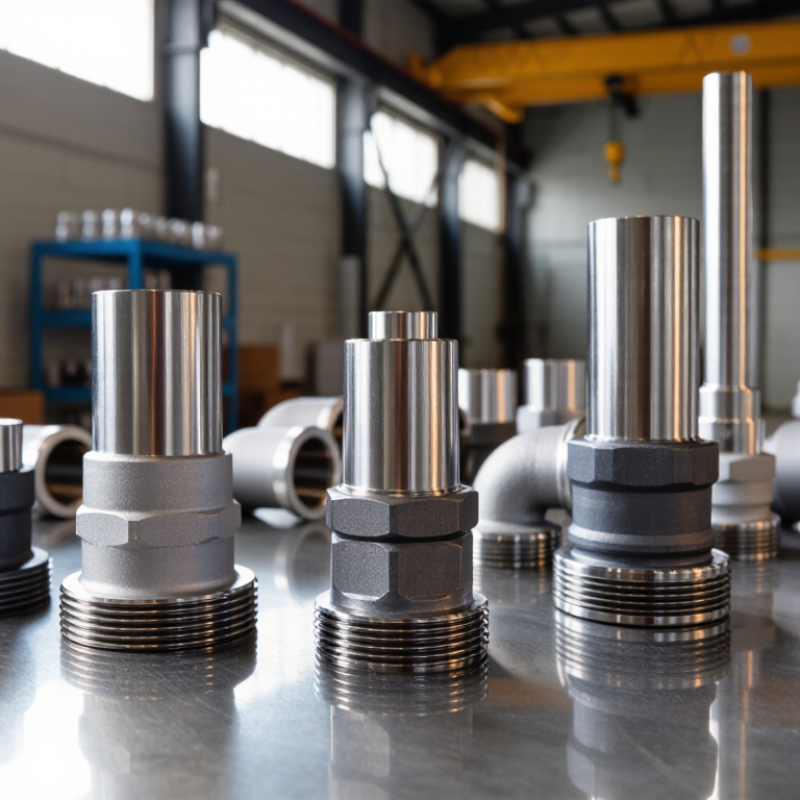
Who Are the China Top 10 Pipe Reducer Suppliers?

What Is a Pipe Reducer and Where Is It Used?

A pipe reducer is a fitting that connects pipes with different diameters. It helps manage changes in flow direction, velocity, and pressure within a piping system. Reducers are commonly concentric, with centered ends, or eccentric, with one side kept level. The choice depends on the layout and the fluid being carried. Small detail, big consequences.

You will find reducers in water treatment plants, heating systems, refineries, and industrial process lines. For example, a larger pipe may feed a smaller branch near a pump, valve, or piece of equipment. A concentric reducer suits many vertical runs. An eccentric reducer may help avoid air pockets or fluid buildup in certain horizontal lines, depending on the system design. It is not a universal rule.

Material and dimensions matter. Stainless steel, carbon steel, and other alloys serve different temperature, corrosion, and pressure conditions. Before installation, check pipe sizes, wall thickness, connection type, and operating limits against project documents. A reducer that fits physically can still create turbulence or unwanted pressure loss if selected poorly. I would also review maintenance access; that practical step is easy to overlook. When conditions are uncertain, consult a qualified piping professional.


How China’s Pipe Reducer Industry Is Structured

China’s pipe reducer industry is not a single row of interchangeable factories. It includes integrated manufacturers, specialist forming workshops, and trading or distribution firms. Some suppliers produce reducers alongside elbows and tees; others focus on a narrower range of sizes, materials, or production methods. The distinction matters. A company with a broad catalogue may outsource certain products, while a smaller workshop may control forming and inspection in-house.

Production often combines hot or cold forming, welding, machining, and dimensional checks. Buyers typically compare concentric and eccentric designs, wall thickness, end preparation, material traceability, and fit with the project’s piping standards. A reducer that looks correct on a drawing can still cause installation problems if its dimensions or transition geometry are poorly controlled. Details count.

Supplier capability also depends on order size and consistency. Large projects may require documented inspections, test records, and repeatable production across many pieces; smaller orders may prioritize lead time and custom dimensions. Export agents can help coordinate shipping, but they are not necessarily the manufacturer. Public supplier rankings rarely reveal these differences, and production claims deserve verification. That picture is useful, but incomplete: factory capacity can change, and a polished catalogue is not proof of reliable process control.

What Criteria Help Identify Leading Chinese Suppliers?

Identifying a leading Chinese pipe reducer supplier starts with verifiable evidence, not a low quotation. Check whether its reducers meet the required material grade, dimensions, wall thickness, and pressure rating. Ask for mill test certificates and traceability linking each product to its heat or batch number. The World Steel Association’s World Steel in Figures 2025 reports that China produced 1,005.1 million tonnes of crude steel in 2024. That scale shows a large industrial base, but it does not prove an individual supplier’s quality.

Review inspection records, including dimensional checks and any specified non-destructive testing. Request sample reports for the exact reducer type, not a similar product. Confirm production capacity, lead times, packaging, and experience with your required export documents. A clear response to technical questions is useful evidence. A polished catalogue alone is not. One detail buyers can overlook is whether test results match the actual material and order.

Tips: Send a drawing with size, schedule, material, and end connections. Compare quotations against the same specification. Ask for dated inspection records and a sample before bulk production. If a claim cannot be documented, treat it as unverified.

Profiles of 10 Notable Pipe Reducer Suppliers in China

China’s pipe reducer market includes suppliers with very different strengths. These ten profiles describe capability types, not a verified ranking or named-company directory.

A large forged-fitting producer may suit demanding service, while a seamless reducer specialist often serves projects requiring consistent wall thickness. Welded-fitting workshops can offer flexibility in larger diameters. Stainless-steel manufacturers focus on corrosion-resistant grades; alloy-steel producers serve higher-temperature applications. Each profile calls for different checks.

Custom fabricators may handle unusual dimensions, but confirm drawings, tolerances, and inspection records before ordering. Export-focused suppliers may be familiar with packing and shipping documents, while domestic stockists can offer quicker access to common sizes.

Some producers specialize in carbon-steel reducers for routine pipelines; others emphasize large-diameter or engineered fittings. Ask for material test reports, dimensional inspection results, and clear delivery terms.

Details matter. A polished catalogue is useful, but it cannot replace production evidence.

These distinctions are easy to miss, and a supplier’s stated capacity may not match every project’s requirements. Verify the actual grade, schedule, end preparation, and traceability for the order.

How to Compare Suppliers for Different Project Needs?

Comparing pipe reducer suppliers for different projects starts with operating conditions, not catalog price. Confirm the reducer type, material grade, size range, wall thickness, and connection method. Then check whether the supplier can provide material test reports, dimensional inspection records, and clear production schedules. These details matter when reducers must match existing pipework. A few millimeters of mismatch can complicate field fit-up.

For high-pressure or corrosive service, ask how material selection and inspection reflect the specified temperature, pressure, and fluid. For routine building or utility work, delivery reliability, standard dimensions, and replacement availability may matter more. Check sample drawings and tolerances before approving production. A polished quotation can still omit packaging, inspection, or documentation costs. Supplier comparison is not always tidy; project specifications may also change midway.

Tips: Send the same technical data sheet to every supplier. Compare itemized quotes, not just unit prices. Ask who handles inspection questions, and how quickly they respond. Keep the answers in writing.

Who Are the China Top 10 Pipe Reducer Suppliers? - How to Compare Suppliers for Different Project Needs?

Use these ten checks to compare pipe reducer suppliers against your project requirements. Standards and material grades below are technical references, not supplier rankings.

Comparison Point Best Suited Project Need What to Verify with Each Supplier Relevant Standard or Reference
Reducer type Concentric reducers for centered pipe transitions; eccentric reducers where a flat side is needed, such as some pump suction or drainage layouts. Confirm the required type, orientation, end connection, and dimensioned drawing before ordering. ASME B16.9 covers dimensions and tolerances for factory-made wrought buttwelding fittings.
Size range and dimensions Projects with defined nominal pipe sizes, wall thicknesses, and end-to-end dimensions. Check both end sizes, schedule or wall thickness, outside diameters, and end-to-end dimensions against the approved piping specification. ASME B16.9; confirm the edition specified by the project.
Carbon steel material General process and utility piping where the design temperature and corrosion conditions permit carbon steel. Verify the specified grade, material test certificate, heat number traceability, and any project-required testing. ASTM A234/A234M includes wrought carbon and alloy steel piping fittings for moderate and high-temperature service; WPB is a commonly specified grade.
Stainless steel material Applications requiring a specified stainless steel grade for corrosion or process conditions. Match the exact grade and product requirements in the purchase specification; review the material certificate and traceability records. ASTM A403/A403M covers wrought austenitic stainless steel piping fittings.
Low-temperature service Piping systems whose design specification requires fittings for low-temperature service. Confirm the required material grade and impact-test requirements; do not assume suitability from the material name alone. ASTM A420/A420M covers wrought carbon steel and alloy steel piping fittings for low-temperature service.
High-strength service Specified high-strength ferritic steel butt-weld fittings for applicable high-pressure transmission or distribution systems. Check grade, specified minimum yield strength, dimensions, inspection, and service requirements against the project documents. ASTM A860/A860M covers high-strength ferritic steel butt-welding fittings.
Welding-end preparation Butt-weld installation where the reducer must match the adjoining pipe and welding procedure. Specify bevel details and tolerances; confirm compatibility with the pipe wall thickness and approved welding requirements. ASME B16.25 covers butt-welding ends.
Pressure and temperature conditions Projects operating within defined design pressure and temperature limits. Ask for the material, wall thickness, design conditions, and applicable piping-code checks; a fitting standard alone does not establish suitability for every service. Use the project’s governing piping code and material specification alongside the fitting standard.
Inspection and documentation Projects requiring documented quality control, traceability, or third-party inspection. Agree in writing on inspection scope, material certificates, marking, heat-number traceability, and any required non-destructive examination before production. Requirements depend on the purchase specification, governing code, and inspection plan.
Delivery and project coordination Projects with fixed delivery windows, multiple sizes, or staged site deliveries. Compare confirmed production and shipping schedules, packaging, export documents, and the supplier’s ability to meet the project’s approved inspection hold points. Set dates and deliverables in the purchase order and inspection and test plan.

This is a technical supplier-comparison checklist, not a verified ranking of ten companies. Confirm the current standard editions, material grades, dimensions, and acceptance criteria in the project specification before procurement.
