How to Choose a Single Jersey Machine in 2026?
Choosing a single Jersey machine in 2026 is not just a matter of comparing speed or price. It means matching machine design to the fabric, yarn, order size, and quality targets your mill actually needs. The market context matters, too. Textile Exchange’s Materials Market Report 2024 estimates global fiber production reached 124 million tonnes in 2023, with polyester accounting for about 57%. This is not a direct measure of single-jersey demand, but it shows the scale and material diversity behind today’s textile supply chain.
Small details matter. Start with the fabric you plan to make: cotton single jersey, polyester blends, or elastane-containing constructions can require different feeding, tension control, and take-down settings. Compare cylinder diameter, gauge, number of feeders, and practical operating speed—not just the headline RPM. Ask suppliers for trial fabric made with your intended yarn, then inspect loop formation, GSM consistency, defects, and roll-to-roll variation. A specification sheet alone cannot prove stable production. Fit comes first.
Also assess changeover time, energy use, spare-parts availability, operator training, and local technical support. Request documented machine trials and clarify how performance figures were measured; published speeds may not reflect your yarn or fabric settings. I would not choose on speed alone. A machine that runs slightly slower but produces fewer rejected rolls may suit a mill better. That judgment should be tested against your own production data. This guide examines the practical criteria, trade-offs, and supplier questions that help buyers make a defensible choice in 2026.
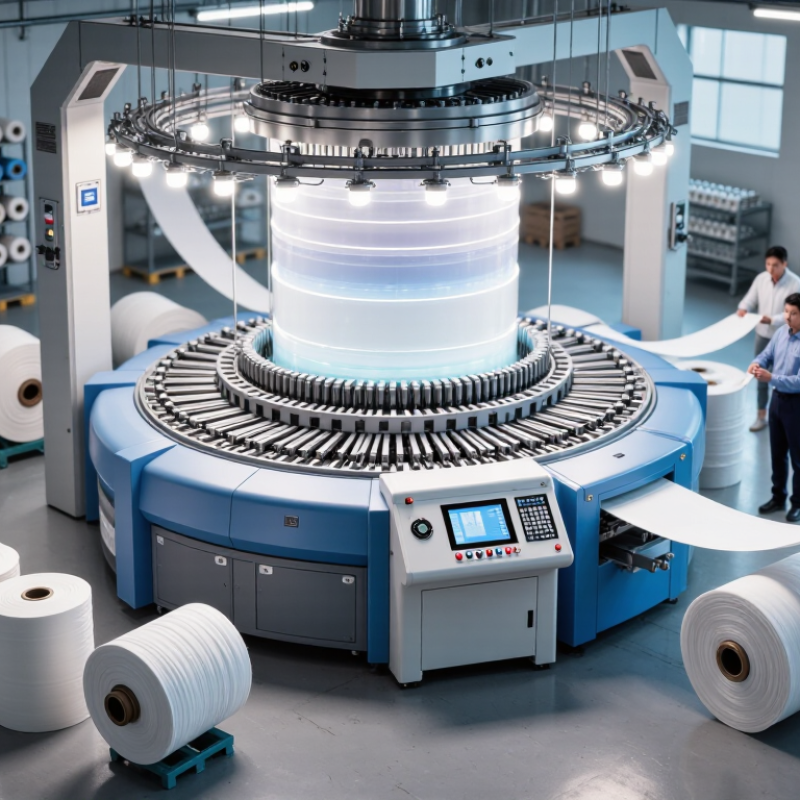
Define Fabric Requirements: Common Single-Jersey T-Shirts Weigh 120–220 g/m²
When choosing a single jersey machine in 2026, start with the target fabric weight, not a machine brochure. Common T-shirt single jersey weighs around 120–220 g/m². At 120–150 g/m², fabric is light, airy, and often suited to warm-weather tees. At 180–220 g/m², it generally feels denser and more substantial. But GSM alone never tells the whole story.
A 160 g/m² cotton sample can behave differently from a polyester blend at the same weight. Yarn count, stitch length, loop density, and finishing affect drape, opacity, and stability. Ask about the machine gauge and cylinder diameter suited to your yarn and intended structure, then knit trial swatches. Check weight after relaxation and washing, not only straight off the machine. Small details matter.
Be specific. A pale fabric at 130 g/m² may show through under bright light, while a dark 150 g/m² version may not. Weigh several conditioned swatches using a GSM cutter or measured-area method. Compare stretch, spirality, shrinkage, and surface appearance. It is tempting to chase one exact number. That can be a mistake. Leave a practical tolerance, record the machine settings, and confirm results with the finishing route you will actually use. Textile production is rarely perfectly tidy.
Select Machine Gauge: Typical Single-Jersey Models Range from 18 to 32 Needles per Inch
Choosing gauge means matching needle density to the fabric you need, not simply selecting the finest machine. Typical single-jersey models range from 18 to 32 needles per inch. Lower gauges generally suit coarser yarns and more open fabrics; higher gauges support finer yarns and tighter, smoother surfaces. Actual results also depend on yarn count, loop length, machine diameter, and finishing.
Textile Exchange’s Materials Market Report 2024 estimates global fiber production reached 124 million tonnes in 2023. That figure shows the scale and variety of textile inputs, but it does not prescribe a machine gauge. Test your intended yarn on sample fabric, then inspect stitch definition, weight, stretch, and needle damage. A gauge chart is not a guarantee. I would also verify that the supplier’s stated gauge matches the needle arrangement and cylinder actually offered.
Tips: Bring your yarn count and target fabric swatch to the machine trial. Compare two nearby gauges if possible, and record settings with each sample. A small trial can expose a mismatch before production. Don’t overlook the finishing step; it can change the fabric’s hand and dimensions.
How to Choose a Single Jersey Machine in 2026? - Select Machine Gauge: Typical Single-Jersey Models Range from 18 to 32 Needles per Inch
Machine gauge is the number of needles per inch measured around the needle cylinder. The fabric descriptions below are general guidance; yarn, stitch length, finishing, and machine setup also affect the final result.
| Machine Gauge (E) | Needles per Inch | General Fabric Character | Typical Applications | Approx. Needles on a 30-Inch Cylinder |
| 18 | 18 needles/in | Relatively open, heavier single jersey | Casual tops, heavier T-shirts, and fabrics made with coarser yarns | ≈ 1,696 |
| 20 | 20 needles/in | Open to medium-weight construction | Everyday T-shirts and general-purpose jersey fabrics | ≈ 1,885 |
| 22 | 22 needles/in | Medium-weight jersey with moderate stitch density | T-shirts, casualwear, and lightweight knit garments | ≈ 2,073 |
| 24 | 24 needles/in | Versatile medium-to-finer jersey | Common all-purpose apparel and standard single jersey | ≈ 2,262 |
| 26 | 26 needles/in | Finer, smoother-looking jersey when yarn and settings are suitable | Lightweight tops and finer-gauge apparel fabrics | ≈ 2,450 |
| 28 | 28 needles/in | Fine jersey construction | Lightweight fashionwear and finer T-shirt fabrics | ≈ 2,639 |
| 30 | 30 needles/in | Fine, relatively dense jersey | Fine-gauge lightweight apparel, subject to yarn compatibility | ≈ 2,827 |
| 32 | 32 needles/in | Very fine single jersey for appropriately fine yarns | Fine lightweight fabrics where a high needle density is required | ≈ 3,016 |
Note: Needle counts are theoretical estimates calculated as gauge × cylinder circumference (π × 30 inches). Actual machine configurations may differ. Choose gauge together with the intended yarn size, fabric weight, stitch length, and required production quality.
Match Cylinder Diameter to Fabric Width: Common Options Span 26–38 Inches
A cylinder diameter sets the scale, but it does not equal the finished fabric width. Using circumference = π × diameter, 26-, 32-, and 38-inch cylinders produce about 81.7, 100.5, and 119.4 inches of tubular circumference. Laid flat, those figures suggest nominal widths near 40.8, 50.3, and 59.7 inches. These are geometric estimates, not production guarantees.
Check the intended fabric’s relaxed width before selecting a machine. Loop structure, yarn count, take-down tension, and finishing can all change the result. ISO 22198:2006 outlines methods for measuring textile width and length; compare samples under consistent conditions. The ITMF International Textile Machinery Shipment Statistics report tracks circular-knitting machinery shipments by category, but shipment data cannot tell you the finished width of a particular fabric. Measure the fabric itself.
Bring a washed, relaxed sample to the supplier, then compare it with the required width and cutting layout. A 32-inch cylinder may suit a mid-width tubular fabric, while wider goods may call for a larger diameter. Still, I would not choose from diameter alone. Ask for a trial using your yarn and stitch settings. Small changes matter. A few inches of excess width can become waste; too little can disrupt production.
How to Choose a Single Jersey Machine in 2026?
Match cylinder diameter to the fabric width you need. Common cylinder options span 26–38 inches.
Estimated laid-flat tubular width is calculated as π × cylinder diameter ÷ 2. Actual fabric width varies with yarn, stitch length, machine settings, and finishing; confirm the required width with a fabric sample.
Compare Output Capacity: Assess Feeder Count, RPM, Stitch Length, and kg/h
How to Choose a Single Jersey Machine in 2026?
Compare capacity on the fabric you will actually sell. Feeder count multiplied by RPM estimates courses produced per minute, but it does not tell you finished kilograms per hour. Needle count, yarn linear density, stitch length, machine gauge, and operating efficiency all matter. ITMF’s International Textile Machinery Shipment Statistics 2023 reported about 23,000 large circular knitting machines shipped that year, roughly 17% fewer than in 2022. Those shipment figures show market activity, not a machine’s output, so request a fabric-specific trial rather than relying on headline speed.
Ask for measured kg/h using your yarn and target fabric. For example, a 30-inch cylinder with 96 feeders running at 25 RPM may produce a different weight than the same setup at a longer stitch length. Longer stitches consume more yarn per loop, increasing fabric weight, but can change appearance and stability. Small details matter. Compare trial results at the same stitch length, yarn count, and fabric width, then record stoppages and rejected rolls. A theoretical kg/h figure assumes continuous running; real output falls with yarn breaks, setup changes, and maintenance. Leave room for doubt: one test shift may not represent a full production week.
Validate Fabric Samples Under ISO 139 Conditions: 20°C and 65% Relative Humidity
Choosing a single jersey machine in 2026 should begin with fabric evidence, not a catalogue specification. Request trial swatches knitted with the yarn and stitch length you expect to use. Then condition them in the ISO 139 standard atmosphere: 20°C and 65% relative humidity, allowing for the standard’s permitted tolerances. Keep samples relaxed and away from direct sunlight, heaters, and drafts. Small environmental shifts matter.
Measure fabric weight, width, loop appearance, and dimensional change only after conditioning. Record the room temperature and humidity beside each result; a handheld meter can reveal whether conditions drifted during testing. Compare swatches made at different machine settings, including stitch length and take-down tension. Check for uneven courses, dropped stitches, curling, and spirality after washing, using the same documented procedure each time. One attractive swatch proves very little.
A practical trial should connect these observations to machine choices, such as cylinder diameter, gauge, and feed arrangement. Ask the supplier to document the settings used, then repeat the trial where possible. If a sample’s weight changes after conditioning, pause before blaming the machine; moisture regain or handling may be involved. I have seen teams rush this step. It costs time later. Keep the sample labels and test notes together, since results without production details are hard to reproduce.