
Email Id: sale@adctooling.com
Choosing the right PCR Cosmetic Tube requires more than selecting a recycled-looking package. The tube must protect the formula, support safe dispensing, and match the brand’s environmental claims. Post-consumer recycled plastic can vary in color, odor, stiffness, and processing performance. These differences matter when the product contains oils, acids, pigments, or active ingredients.
Packaging specialist Robert Lockyer states, “Packaging must protect the product and communicate its value.” This principle remains useful when evaluating a PCR Cosmetic Tube. Start with material compatibility. Check whether the tube resists swelling, cracking, leakage, or unwanted interaction with the formula. Then examine the shoulder, cap, nozzle, and seal. A beautiful tube is not enough. It must work in a real bathroom.
PCR content may also affect appearance. Natural gray tones, tiny specks, and slight color variation can appear during production. That is not always a defect. It can become part of an honest sustainability story. However, inconsistent decoration may weaken shelf appeal. Brands should test printing, hot stamping, labeling, and color matching before approving mass production.
The decision should include squeeze feel, opening force, dosage control, transport durability, and end-of-life considerations. Ask suppliers for traceability and test data. Review the PCR percentage carefully. “Eco” is not a technical specification. A high PCR ratio may create processing challenges, while a lower ratio may offer better performance. The right choice is rarely perfect. It is a balanced decision, supported by evidence, testing, and a willingness to question attractive claims.
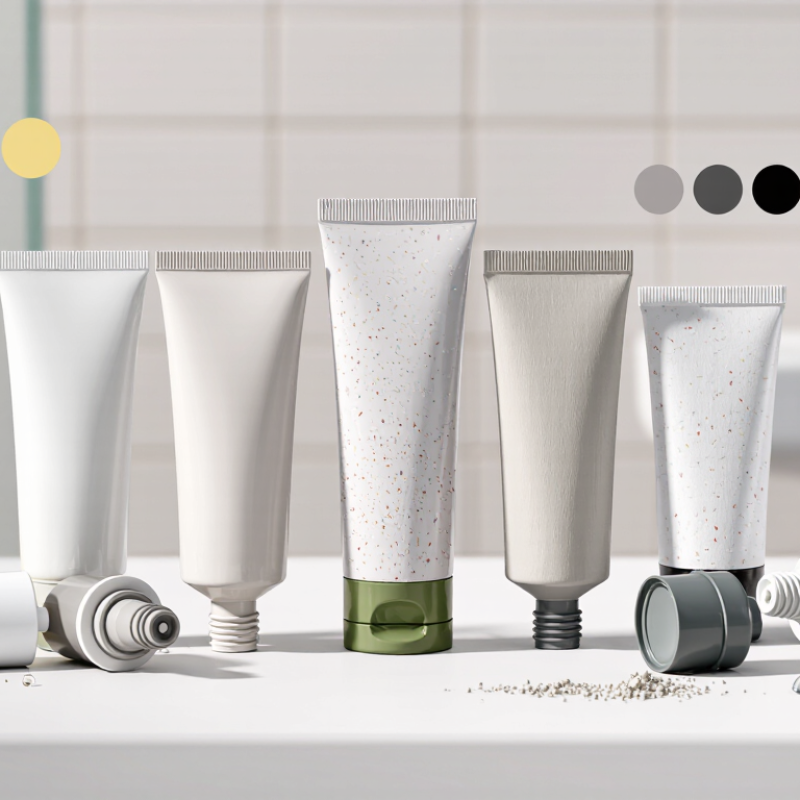
How to Choose the Right PCR Cosmetic Tube?
A PCR cosmetic tube contains post-consumer recycled plastic from previously used products. It is processed, tested, and converted into new packaging. The recycled material may reduce dependence on virgin plastic and support a more circular packaging system. However, PCR does not mean the tube is automatically recyclable. These terms describe different stages of packaging use.
The material matters because cosmetics can react with packaging surfaces. A suitable tube should protect the formula from leakage, oxygen, light, and contamination. Testing should cover compatibility, seal strength, drop resistance, odor, and long-term storage. Tube shape also affects daily use. A soft tube helps consumers control thick creams, while a firmer tube may suit lighter lotions. The cap must close securely and remain easy to open.
A practical lesson from packaging evaluations is simple: sustainability claims need evidence. Ask for PCR content documentation, material specifications, batch traceability, and test results. Some PCR resin can show slight color variation or a faint odor. That may be acceptable for a body product, but not for every formula. A cleaner appearance can require more processing, which may affect environmental benefits. This is where careful judgment matters. PCR is valuable, but it is not a universal solution. Select the tube only after reviewing the formula, filling process, storage conditions, and consumer handling habits. Mistakes often happen when appearance receives more attention than performance.
How to Choose the Right PCR Cosmetic Tube?
How to Match Tube Materials with Cosmetic Formula Requirements
Choosing a PCR cosmetic tube starts with the formula, not the sustainability claim. A rich cream may need a flexible tube with strong recovery after squeezing. A watery lotion can demand better flow control and sealing performance. The material must also resist oils, alcohol, acids, and active ingredients. Small differences matter.
PCR polyethylene can reduce virgin plastic use, but its properties may vary between production batches. This variation can affect color, stiffness, odor, and barrier performance. I recommend screening the actual formula inside the proposed tube. Store samples under heat, room conditions, and cold exposure. Then check leakage, swelling, cracking, odor transfer, and decoration adhesion. Do not test only an empty package.
A multilayer structure may protect sensitive formulas from oxygen, light, or moisture. However, it can complicate recycling goals and increase manufacturing costs. A single-material tube may offer simpler recovery, yet provide less protection for demanding products. There is no perfect option. The right choice depends on shelf life, filling temperature, dispensing feel, and transport conditions.
Compatibility testing should include the cap, shoulder, seal, and inner layer. The formula touches more than the visible tube wall. A package can look stable for two weeks, then soften near the shoulder. That is easy to miss. Technical specifications, migration assessments, and controlled production trials support more reliable decisions. Human judgment still matters, especially when the formula is new or unusually concentrated.
Material-selection guide for post-consumer recycled plastic cosmetic tubes
| Formula Requirement | Typical Cosmetic Formula | Recommended Tube Material | Why It Fits | PCR Integration Approach | Main Watchouts | Required Validation |
|---|---|---|---|---|---|---|
| Standard water-based emulsion Moderate oil and water content | Hand cream, body lotion, facial moisturizer | PCR-HDPE or PCR-LDPE/HDPE blend | Polyethylene tubes provide good flexibility, squeezability, and general compatibility with many aqueous emulsions. | Use PCR polyethylene in the tube body, with a controlled virgin-polymer layer if needed for sealing, appearance, or performance. | Color variation, odor, gels, and inconsistent mechanical properties may be higher than with virgin resin. | Stability, odor transfer, leakage, drop, squeeze-cycle, and seal-integrity testing. |
| High-oil or anhydrous formula Significant exposure to oils, esters, or waxes | Cleansing balm, body butter, petroleum-free balm, solid cream | PCR-HDPE with a suitable inner layer, or PCR-PP where stiffness is preferred | HDPE and PP can offer better resistance to many oils than lower-density, highly flexible structures, subject to the specific formula. | Place PCR content in the outer or structural layer while using a compatible contact layer when required. | Oils and fragrance materials can cause swelling, softening, stress cracking, or additive migration in some plastics. | Long-term compatibility, mass change, dimensional change, stress-crack, and formula odor testing. |
| Fragrance-rich formula High level of volatile or aromatic ingredients | Perfumed body cream, fragranced hand cream, aromatic scrub | Multilayer PE tube with a barrier layer, or carefully screened PCR-HDPE structure | A barrier layer can reduce fragrance loss and limit interaction between volatile ingredients and the tube wall. | Use PCR in the outer structural layer when the barrier and product-contact layers require tighter control. | PCR resin may contribute background odor or contain variable trace substances if feedstock controls are insufficient. | Fragrance retention, odor panel, permeation, accelerated aging, and extractables screening. |
| Low-pH or acid-containing formula Formula pH may be below neutral | AHA body lotion, fruit-acid cream, exfoliating gel | PCR-HDPE, PCR-PP, or a multilayer structure selected after compatibility testing | Polyolefins are generally resistant to many dilute aqueous acids, but the complete formula and package construction determine performance. | Use verified PCR resin in non-contact or structural layers if the formula-contact layer needs tighter chemical control. | Acids, chelators, preservatives, and fragrances can act together and may affect seals, colorants, or closures. | pH stability, leakage, seal strength, visual change, corrosion screening for components, and migration assessment. |
| Alcohol-containing formula Contains ethanol or other volatile solvents | Sanitizing gel, alcohol-based treatment gel, lightweight styling product | PCR-HDPE or PCR-PP after solvent compatibility screening | Polyolefin tubes may perform well with aqueous alcohol systems, but concentration, additives, and storage conditions are critical. | Use PCR in the body or outer layer after confirming odor, stress resistance, and dimensional stability. | Solvents can increase permeation, extract additives, or aggravate environmental stress cracking. | Alcohol-content exposure, weight loss, permeation, cracking, seal integrity, and accelerated storage tests. |
| Water-rich gel Low viscosity and high water content | Aloe gel, hydrogel mask, after-sun gel, cleansing gel | PCR-LDPE/HDPE blend or PCR-PE multilayer tube | Flexible PE structures support controlled dispensing and are commonly used for aqueous gels. | PCR content can be concentrated in the tube body while preserving a consistent inner contact surface. | Very low-viscosity products may increase leakage risk through weak seals or poorly matched closures. | Inversion leakage, closure torque, dispensing performance, seal strength, and microbial-package compatibility testing. |
| Pigmented or opaque formula Appearance is not highly sensitive to package color | Clay mask, tinted cream, scrub, colored treatment | PCR-HDPE or PCR-PP with approved color masterbatch | Opaque formulas can better conceal the natural shade variation commonly associated with PCR plastics. | Use a controlled pigment system and define acceptable color tolerance before production. | Colorants may affect recyclability, and dark or heavily pigmented packaging can limit future sorting options. | Color measurement, batch-to-batch consistency, odor, rub resistance, and package-to-formula staining tests. |
| High oxygen or light sensitivity Formula degrades through oxidation or light exposure | Antioxidant serum cream, vitamin-containing cream, botanical treatment | PCR-PE or PCR-PP with an appropriate oxygen/light barrier structure | Barrier layers and opaque constructions can reduce oxygen and light exposure more effectively than a simple single-layer tube. | Place PCR in the outer layer while maintaining the required barrier and product-contact performance. | A higher PCR percentage does not automatically provide better barrier performance; the full laminate must be evaluated. | Oxygen transmission, light transmission, active-ingredient assay, color change, and real-time stability testing. |
Choosing the right PCR cosmetic tube starts with its contents, not its appearance. A 50 ml tube is not automatically suitable for a 50 ml formula. Leave practical headspace for filling, expansion, and consumer handling. According to Smithers’ 2024 packaging research, lightweighting and recycled content remain major development priorities in beauty packaging. However, higher PCR content can reduce stiffness, alter color, and affect weld consistency.
Size should match usage frequency. A 15–30 ml tube suits travel products, samples, and concentrated treatments. Larger 75–200 ml tubes work better for body care and frequent application. Measure the formula’s viscosity and expected dose before selecting the opening. The Ellen MacArthur Foundation’s 2023 Global Commitment report identifies packaging as a major source of plastic use, making material efficiency important. Still, reducing weight too aggressively may create a weak shoulder or a tube that collapses poorly.
Shape changes both handling and production. Round tubes roll easily, while oval or flat profiles offer better shelf stability and branding space. The dispensing method must follow the formula. A narrow orifice controls thin gels, while a wider opening suits creams with particles or heavier textures. Flip-top closures support quick use; screw caps can provide a more secure seal. Pumps may improve dose control, but they add components and recycling complexity. Test leakage, torque, squeeze recovery, and compatibility for at least several weeks. A prototype can look perfect and still fail in a warm bathroom. That part is easy to underestimate.
When evaluating a post-consumer recycled cosmetic tube, inspect performance before appearance. The tube should protect the formula from oxygen, moisture, light, and outside odors. Ask for barrier data under realistic storage conditions, not only ideal laboratory results. For a sensitive cream, test samples at high temperature and after repeated opening. A tube that softens, swells, or changes color needs further investigation.
Safety depends on more than clean production. Check material specifications, supplier traceability, and records for restricted substances. Request migration, compatibility, and seal-integrity testing for the exact formula. Fragrance oils, acids, and active ingredients may interact with recycled polymers differently. Closures deserve equal attention. A loose cap can introduce air, microbes, or leakage during transport. If data is missing, do not fill the gap with assumptions. Not comfortable.
Sustainability needs a wider view. Compare recycled content, tube weight, decoration, energy use, and end-of-life options. More PCR is not automatically better if it shortens shelf life or increases product waste. Prefer clear documentation, consistent batches, and designs that avoid unnecessary layers. Still, recyclability claims can be difficult. Local sorting systems may not accept every tube format. Ask whether the proposed design works where customers actually dispose of it. Small details matter.
Choosing the right PCR cosmetic tube requires more than comparing prices. A supplier should provide clear specifications for material, capacity, wall thickness, optical clarity, and cap design. Polypropylene is commonly preferred for its thermal resistance and chemical stability. Ask whether the tubes are certified DNase-free, RNase-free, and suitable for your thermal cycler.
Request samples before placing a large order. Inspect the tubes under bright light. Look for scratches, uneven walls, particles, or poorly formed caps. A secure cap should close evenly without excessive force. Test several tubes through repeated heating and cooling cycles. Check for leakage, deformation, and visible evaporation. Small defects can affect reaction volume and produce inconsistent results.
Supplier reliability also matters. Review batch records, quality certificates, inspection procedures, and production traceability. Ask how the supplier manages dimensional tolerances and customer complaints. If possible, run a small comparison test using the same master mix and samples. Compare amplification curves, Ct values, sealing performance, and tube fit. I once trusted a clean-looking sample too quickly. The larger shipment showed slight cap variation. That mistake was avoidable. A perfect checklist is not enough. Keep written acceptance criteria, and confirm them again before payment.