What is Cold Rolled Coil and its Applications?
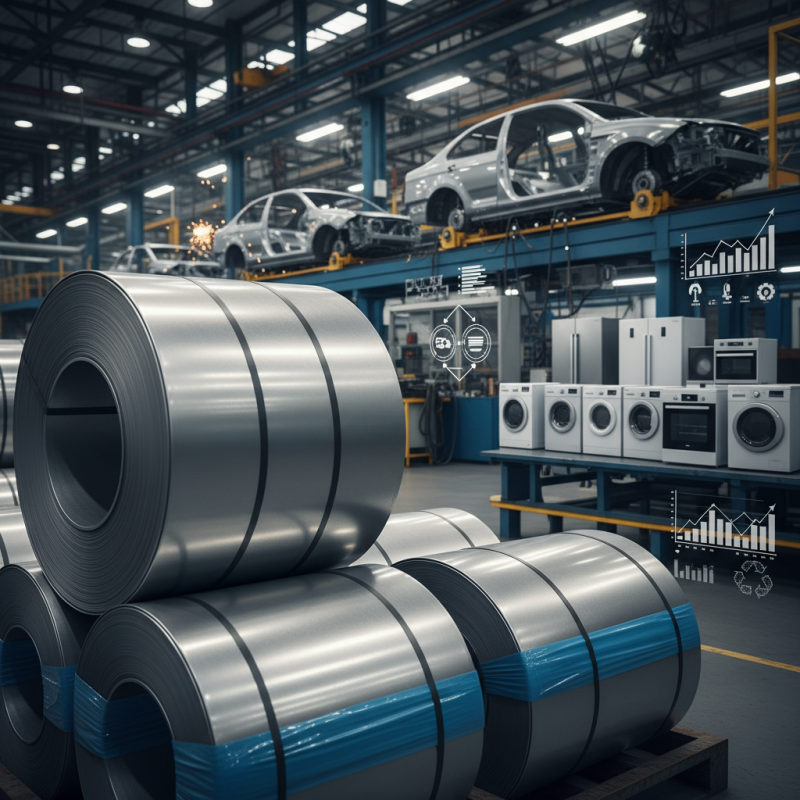
Cold Rolled Coil is a significant product in the steel industry. It is created by processing hot-rolled steel through the cold rolling process. This process enhances its surface finish and dimensional accuracy. Cold Rolled Coil is often used in various applications, such as automotive manufacturing and home appliances.
The unique properties of Cold Rolled Coil make it suitable for specific uses. The smooth surface lends itself well to painting and coating. Additionally, its strength enables it to withstand various stresses found in industrial environments. However, there may be concerns about the availability of suitable raw materials and the economic impact of production costs.
In examining Cold Rolled Coil, one must consider both advantages and challenges. While its applications are broad, the industry must also reflect on environmental issues and sustainability. It's essential to balance production efficiency with responsible sourcing and waste management. The future of Cold Rolled Coil will depend on innovation and maintaining high standards.
Definition of Cold Rolled Coil and Its Manufacturing Process
Cold rolled coil (CRC) is a steel product created by rolling hot-rolled coils at room temperature. This process enhances precision in thickness and shapes the surface quality. The production begins with hot-rolled steel, which is then cooled and further processed through cold rolling mills. These mills apply high pressure, reducing thickness while improving strength and surface finish. The result is a smooth and refined product, often used in various industries.
The manufacturing process of cold rolled coil includes several steps. Initially, the steel is uncoiled and passed through a series of rollers. These rollers compress the steel sheets to the desired thickness. After rolling, surface treatments like pickling or annealing may be applied. These treatments remove impurities and enhance properties. The entire process requires careful monitoring. Small variations in temperature can lead to inconsistencies in the final product.
Despite its advantages, cold rolled coil comes with challenges. The high production standards can sometimes be difficult to maintain. Additionally, the process can produce waste materials that require proper management. Manufacturers must continuously evaluate their techniques. It's essential to balance efficiency with waste reduction. This ongoing reflection can lead to improvements in sustainability practices.
Key Characteristics and Properties of Cold Rolled Coil
Cold rolled coil is a type of steel that undergoes a specific processing method. This technique enhances its surface finish and dimensional accuracy. The result is a product with better mechanical properties compared to hot-rolled steel. Cold rolled coil typically has a smooth surface, making it ideal for various applications.
One of the key characteristics of cold rolled coil is its high strength. It maintains excellent tensile strength and yield strength. Additionally, the tight tolerances achieved in production allow for easier fabrication. These properties make it suitable for use in automotive and appliance manufacturing. It is often used in parts that require precision and durability.
Another important property is its formability. Cold rolled coil can be easily bent and shaped without cracking. However, it may not be as ductile as hot-rolled alternatives. This means that while it is great for certain applications, it might not be the best choice for every project. Careful consideration is needed when selecting materials for specific uses. The balance of strength and flexibility is crucial in achieving the desired outcome.
Common Applications of Cold Rolled Coil in Various Industries
Cold rolled coil (CRC) is essential in various industries due to its versatility. The automotive sector heavily relies on CRC for producing lightweight parts. According to recent data, approximately 30% of cold rolled steel is used in this industry, emphasizing its critical role in manufacturing durable vehicles. The reduction in weight directly impacts fuel efficiency and performance.
In construction, cold rolled coil is vital for structural applications. It is used in making frames and supports for buildings. Data suggests that the construction sector accounts for about 25% of CRC consumption. These materials provide strength while maintaining a lightweight profile, which is crucial for modern architectural designs. CRC's smooth surface finish makes it ideal for aesthetic components as well.
Another significant application of cold rolled coil is in the home appliance industry. Products such as refrigerators and washing machines often use CRC for their casings. A report indicates that around 20% of cold rolled steel material ends up in this sector. However, the challenge remains in recycling and sustainability. As the demand grows, the industry must address waste management and efficient production practices to ensure environmental responsibility.
Advantages of Using Cold Rolled Coil Over Other Steel Products
Cold rolled coil is a widely used steel product offering several advantages over hot rolled alternatives. One significant benefit is its enhanced surface finish. The cold rolling process creates a smoother, more polished surface. This makes it ideal for applications requiring a clean aesthetic, such as automotive and appliance manufacturing.
Another advantage is improved dimensional accuracy. Cold rolled coils exhibit tighter tolerances than their hot rolled counterparts. This precision is crucial for components that need to fit together seamlessly. For instance, when constructing machinery, precise measurements can prevent costly errors.
Cost-effectiveness is another reason to choose cold rolled coil. Although the initial investment might be higher, the longevity and lower maintenance needs can offset these costs. However, some industries may overlook this material due to its higher price point. They often default to cheaper options. This decision can lead to increased material failure rates, forcing businesses to reconsider their choices. The initial savings can sometimes mask long-term expenses, which is worth reflecting on.
What is Cold Rolled Coil and its Applications?
| Dimension | Cold Rolled Coil | Hot Rolled Coil | Galvanized Steel |
| Thickness (mm) | 0.5 - 3.0 | 1.5 - 25.4 | 0.5 - 5.0 |
| Yield Strength (MPa) | 250 - 400 | 200 - 300 | 250 - 550 |
| Common Applications | Automotive, Appliances, Furniture | Construction, Structural Components | Corrosion Resistance, Roofing |
| Surface Finish | Smooth, Clean Surface | Milled Surface | Zinc Coated |
Future Trends and Innovations in Cold Rolled Coil Technology
Cold rolled coil (CRC) technology is evolving rapidly. Innovations are leading to enhanced properties. Future trends focus on sustainability and efficiency. This means reducing waste during production. For example, next-generation processes are using less energy and fewer resources. These changes can significantly lower the carbon footprint of CRC.
As industries adapt, new applications are emerging. CRC is becoming vital in automotive and construction sectors. Manufacturers seek materials that are lightweight yet strong. Cold rolled coils fulfill these demands effectively. However, challenges remain. The market requires constant innovation to stay competitive. Not every new technology proves effective on the first try. There are often setbacks. Developers may rethink strategies to enhance quality and performance.
Research is also exploring smart technologies. Integrating sensors could optimize manufacturing processes. This idea is still in its infancy. The potential exists, but implementation can be tricky. Companies must invest in training and equipment. The road ahead is filled with possibilities, but it’s not without hurdles. A balanced approach will determine the future landscape of cold rolled coil technology.