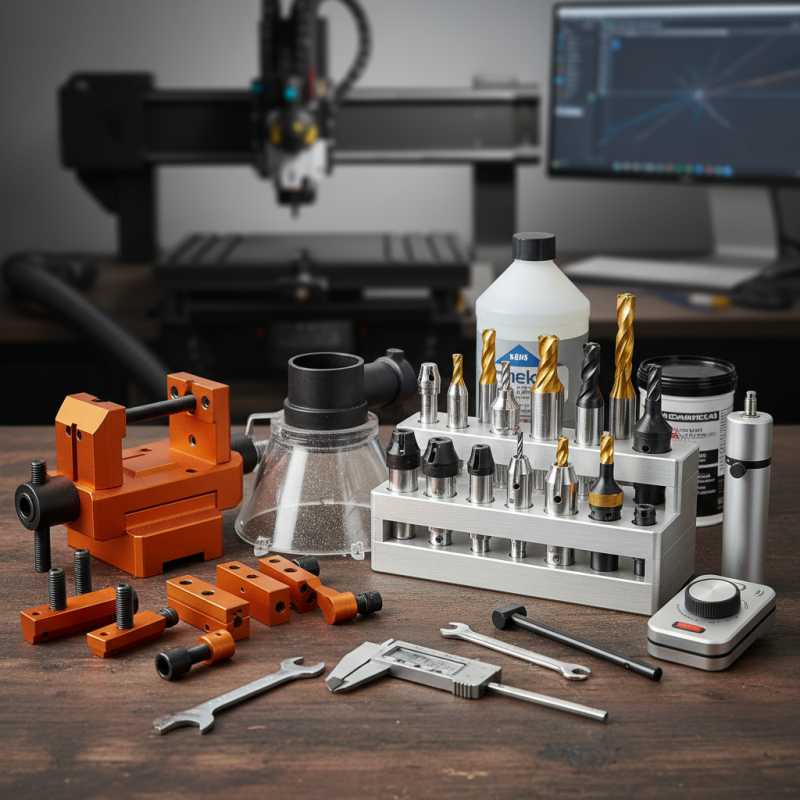
Top 10 Essential CNC Accessories You Need for Your Projects?
In the world of CNC machining, the right tools can make all the difference. CNC Accessories play a vital role in enhancing project efficiency and precision. Whether you're a beginner or a seasoned expert, knowing which accessories to include is essential.
Imagine starting a project without the right clamps or software. Frustration mounts quickly. Essential CNC Accessories can streamline your work and save time. From tool holders to dust shoes, each piece serves a specific purpose. Sometimes, it's easy to overlook certain items.
Investing in the right accessories can elevate your projects. Explore the top ten essential options. Consider your personal needs and the projects you tackle most often. Finding the best fit is crucial. Each accessory can impact the final output negatively or positively. As you navigate this journey, reflect on what you truly need versus what seems appealing.
Essential CNC Accessories Overview
When embarking on CNC projects, having the right accessories is crucial for efficiency and precision. A recent industry report highlighted that nearly 70% of CNC users believe accessories significantly enhance their output quality. Among these, workholding devices take the spotlight. They stabilize materials while cutting. A secure hold reduces vibrations and improves accuracy, which is essential for intricate designs.
Next, tooling stands as another vital accessory. Experts suggest that proper tooling can cut production time by up to 30%. Quality tools provide cleaner cuts and reduce wear on machines. However, many beginners overlook the importance of selecting the right tool for specific tasks. This decision can impact the overall project quality.
Other important accessories include dust collection systems, which can boost air quality and machine longevity. Yet, not all dust collection solutions are effective. Inadequate setups can lead to health risks and maintenance issues. A careful evaluation of these accessories can prevent costly mistakes and enhance the CNC experience significantly.
Key Considerations for Choosing CNC Accessories
When choosing CNC accessories, it's important to consider compatibility and performance. Your CNC machine's capabilities must align with the accessories you select. A 2022 report by the International Manufacturing Technology Show indicated that over 70% of production issues stem from improper tool use. This highlights the need for thoughtful selection.
Quality materials also play a significant role. Accessories made from inferior materials can wear out quickly and affect precision. A recent survey found that users reported a 30% decrease in accuracy when using low-quality parts. It’s a costly mistake that could derail your project. Inspect reviews and user experiences before purchase.
Don't overlook safety features. Enhanced safety gears, like protective covers and emergency stops, are essential. Reports show that 40% of beginners neglect safety in favor of productivity. This is a dangerous oversight. Choose accessories that prioritize not just efficiency, but also user safety. Consider the long-term implications of your choices.
Top CNC Tool Holders for Precision Work
When it comes to CNC machining, precision is non-negotiable. Tool holders play a crucial role in ensuring that your bits remain securely attached during operations. A poor tool holder can lead to vibrations, decreased accuracy, and an overall subpar finish. The right tool holder can help you achieve clean cuts and smooth surfaces.
Different types of tool holders are available, such as collet chucks and end mill holders. Each has its advantages. Collet chucks provide a tight grip, ideal for small bits. End mill holders are robust and suitable for larger tools. Choosing the right one depends on your project needs. However, the learning curve can be frustrating. Sometimes, experimentation is necessary to find what works best for your setup.
A common pitfall is neglecting the maintenance of your tool holders. Dirty or worn tool holders can affect your results. Regular cleaning and inspection can mitigate these issues. It’s easy to overlook, but a simple check can save you from bigger problems down the road. Remember, precision work requires both the right tools and attention to detail.
Must-Have CNC Safety Equipment
CNC projects require not only advanced machinery but also essential safety equipment. Safety is paramount in CNC operations. According to industry reports, over 30% of CNC-related accidents result from inadequate protective measures. Having the right safety gear can drastically reduce these risks.
Wearable gear like safety goggles and ear protection are crucial. Goggles protect your eyes from flying debris, while ear protection reduces noise exposure, limiting potential hearing loss. A recent study indicated that operators who wear appropriate eye and ear protection report fewer workplace injuries.
Tips for enhancing safety include regular equipment checks and maintaining a clean workspace. Block any path where debris could build up. Ensure emergency stops are functional. Regular maintenance reduces unexpected failures. Effective communication among team members is also essential.
It's easy to overlook personal protective equipment, but neglecting it can lead to costly errors. A simple helmet could prevent a serious head injury. Even though some may think safety gear is uncomfortable or inconvenient, the benefits far outweigh the discomfort. Prioritize safety – it’s non-negotiable in CNC operations.
Optimizing Projects with CNC Software and Controls
CNC projects demand precision and efficiency. Using the right software and controls can elevate your work significantly. According to recent industry reports, over 70% of CNC users believe that optimized software enhances their productivity. These tools streamline processes, reduce errors, and make design adjustments easier.
Choosing the right CNC software is critical. Many options are available, catering to different skill levels. For instance, some programs focus on beginners, while others are tailored for experienced users. These platforms can automate tasks, allowing users to focus on creativity. However, not every choice fits every project. It's essential to experiment with different software to find the most effective one for your specific needs.
Moreover, effective control systems can impact machining accuracy and speed. Some users face frustration when their controls are not intuitive. There’s a learning curve that can slow down production initially. Yet, patience and practice lead to better results over time. Investing in training can help users feel more confident with complex systems. This is an area deserving attention in your workflow. Adjusting your approach can lead to breakthroughs, allowing for more innovative designs in your CNC projects.
Top 10 Essential CNC Accessories for Your Projects