Essential Tips for Choosing PTFE Lined Pipe for Your Projects?
Choosing the right piping for your project is crucial. Among various options, the PTFE lined pipe stands out for its versatility and resistance to chemicals. When looking for piping solutions, understanding the advantages of PTFE lined pipes can make a significant difference.
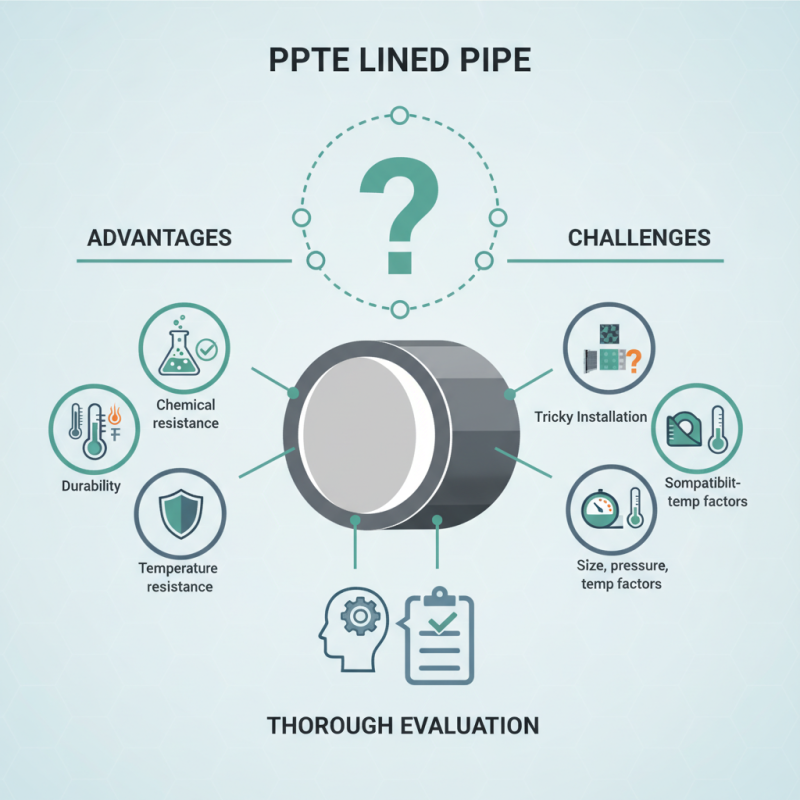
PTFE lined pipes offer durability and reliability. They are resistant to corrosion and can handle extreme temperatures. This makes them ideal for various industries, including chemical processing and food production. However, selecting the right PTFE lined pipe requires careful consideration. Factors like size, pressure ratings, and temperature conditions play a vital role.
While PTFE lined pipes have many benefits, they also come with challenges. Installation can be tricky, and ensuring proper fitting is essential. Potential issues in compatibility with other materials should not be overlooked. A thorough evaluation of your specific needs is necessary to avoid common pitfalls. Understanding both the strengths and limitations will lead to better project outcomes.
Factors Influencing the Selection of PTFE Lined Pipe in Industrial Applications
When selecting PTFE lined pipe for industrial applications, several factors play a crucial role. One primary consideration is the operational temperature and pressure. PTFE lining can withstand temperatures up to 260°C. However, if your application involves cycling between high and low temperatures, thermal expansion may lead to potential failures. Awareness of these limits helps prevent costly downtime.
Another factor to consider is the chemical compatibility of the fluid being transported. PTFE has excellent chemical resistance, allowing it to handle a wide range of aggressive substances. According to industry reports, over 95% of chemical processes can benefit from PTFE due to its low friction and non-stick properties. Still, it’s essential to verify compatibility charts specific to your fluids to avoid unexpected reactions.
Mechanical properties also demand attention. The flexibility of PTFE can be advantageous; however, its susceptibility to damage under high impacts should be kept in mind. Ensuring proper installation techniques is critical. A poorly installed PTFE lined pipe may not perform as expected. Regular inspections can identify wear and tear early, maintaining the integrity of the system. Always weigh these factors against your project’s specific needs for optimal performance.
Essential Tips for Choosing PTFE Lined Pipe for Your Projects
| Factor |
Description |
Impact on Selection |
| Temperature Resistance |
PTFE lined pipes can withstand high temperatures, making them suitable for various industrial applications. |
Critical for applications involving heated fluids. |
| Chemical Compatibility |
PTFE is highly resistant to corrosive substances, ensuring longevity in aggressive environments. |
Essential for industries like chemical processing and pharmaceuticals. |
| Pressure Rating |
The pressure rating indicates the maximum operating pressure without failure. |
Determines the suitability for high-pressure applications. |
| Size and Diameter |
Available in various sizes to accommodate different flow requirements. |
Important for ensuring adequate flow and system compatibility. |
| Installation Requirements |
Consideration of the installation process and technical expertise needed. |
Can affect project timelines and costs. |
| Maintenance Needs |
PTFE lined pipes usually require less maintenance compared to other materials. |
Lower operational costs over time. |
| Cost |
Includes initial investment and long-term operational costs. |
Balance between upfront costs and performance lifespan. |
Understanding the Temperature and Pressure Ratings for PTFE Lined Pipes
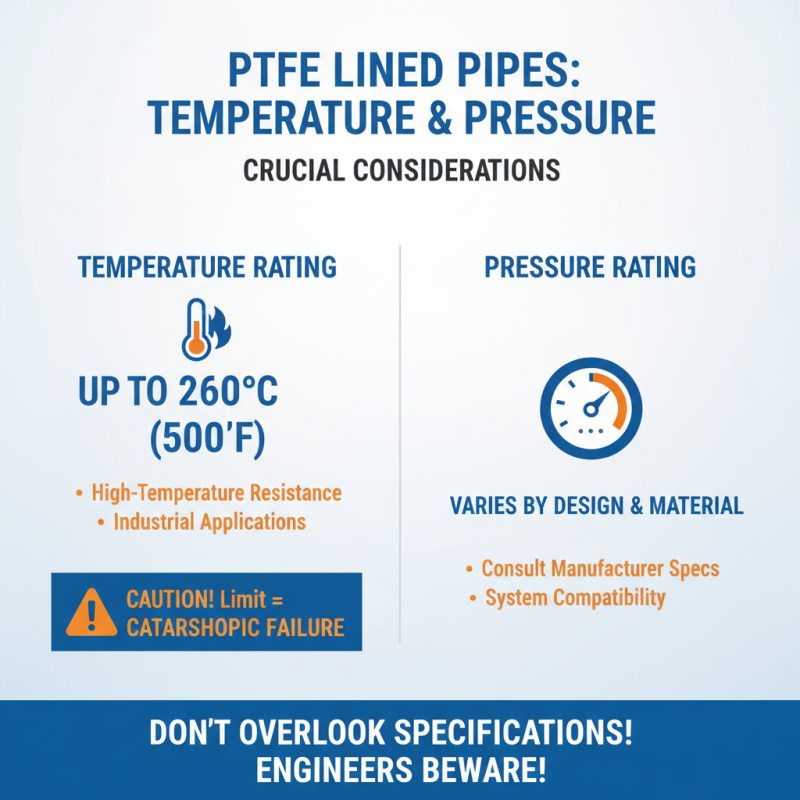
When selecting PTFE lined pipes, understanding temperature and pressure ratings is crucial. PTFE, or polytetrafluoroethylene, can withstand temperatures up to 260°C (500°F). This high-temperature resistance makes it suitable for various industrial applications. However, exceeding this limit can lead to catastrophic pipe failures. Many engineers overlook these specifications.
Pressure ratings also play a vital role. PTFE lined pipes typically handle pressures up to 150 psi, depending on the thickness of the lining and the material of the pipe. A study by the Chemical Engineering Journal indicates that improperly rated pipes can rupture unexpectedly. This highlights the necessity of careful calculations in design.
Pipes under continuous high pressure should undergo rigorous testing. Neglecting these parameters may result in severe operational issues. Operators might find themselves facing unexpected downtime and costly repairs. The impact of temperature and pressure ratings shouldn't be underestimated. Diligent attention to these details prevents potential disasters.
Evaluating Chemical Compatibility of PTFE Lined Pipes for Specific Projects
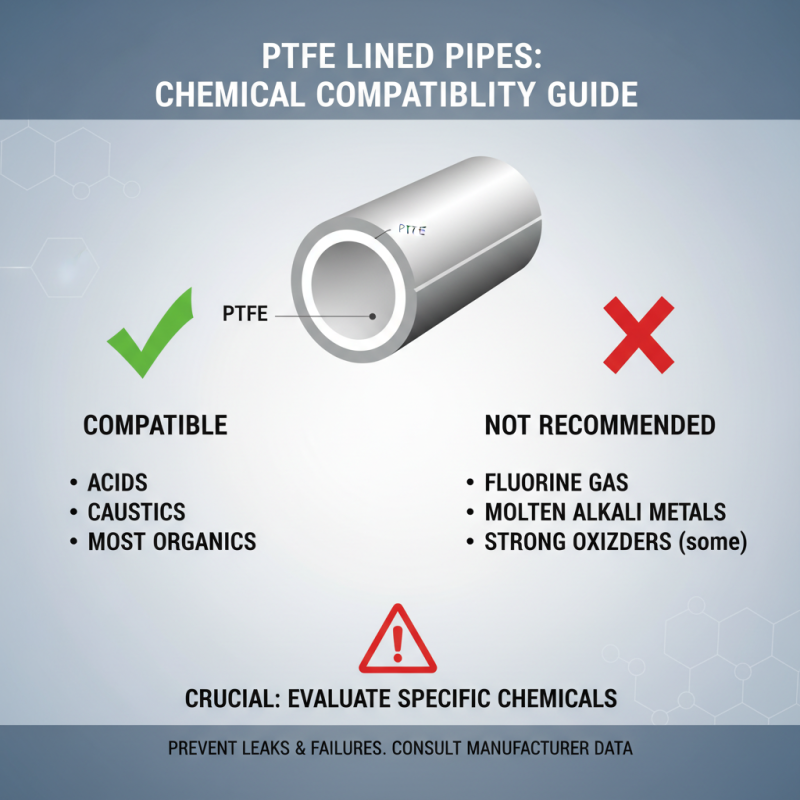
When selecting PTFE lined pipes, evaluating their chemical compatibility is crucial. PTFE, or polytetrafluoroethylene, offers excellent resistance to many chemicals. However, not all chemicals are compatible. Some may react adversely, causing leaks or failures.
To assess compatibility, start with the specific chemicals used in your project. Research each chemical’s properties. Check for known reactivity with PTFE. Common incompatible substances include strong oxidizers and certain metal salts. A simple compatibility chart can be handy.
Consider testing in a controlled environment. Even if a material seems compatible, real-world conditions could differ. Temperature, pressure, and concentration can alter the outcomes. It’s wise to consult with experts in the field. They may offer insights you haven’t considered. Evaluate your options carefully to avoid potential failures down the line.
Cost Analysis: Initial Investment vs. Long-term Benefits of PTFE Lined Pipes
When considering PTFE lined pipes, a proper cost analysis is crucial. The initial investment may seem high. However, long-term benefits can outweigh the upfront costs. PTFE lined pipes are known for their chemical resistance. This characteristic can prevent corrosion and minimize maintenance costs. Over time, this leads to significant savings.
Organizations often underestimate these long-term advantages. Avoiding constant repairs and replacements can boost operational efficiency. Additionally, PTFE lined pipes can enhance process reliability. This is important for maintaining consistent production levels. Investing in quality materials often pays off in unforeseen ways.
It's also essential to factor in operational lifespan. PTFE lined pipes can last much longer than standard alternatives. They often prove more effective in heavy-duty applications. Yet, some companies falter by focusing solely on initial prices. Reflecting on long-term performance is essential for making an informed choice. Costs might seem daunting initially, but the benefits can be substantial.
Installation Best Practices for Maximizing the Performance of PTFE Lined Pipes
When installing PTFE lined pipes, attention to detail is crucial. Proper alignment during the installation helps prevent stress concentrations that can lead to premature failures. Misalignment can cause leaks, which may result in costly downtime. Studies indicate that 30% of pipe failures are linked to installation errors. Therefore, achieving precise alignment is essential for optimal performance.
Another critical consideration is the selection of appropriate fasteners. Unsupported expansions can lead to buckling, especially in long runs of piping. Using the right type of bolts and ensuring they are adequately torqued can mitigate risks. Industry reports suggest that poorly secured joints are responsible for 25% of maintenance issues in PTFE lined systems.
Additionally, regular inspection and maintenance should be incorporated into your schedule. It is not enough to install and forget. Inspections should focus on checking for abrasions or chemical degradation. According to expert analyses, neglecting regular maintenance can lead to a 40% increase in failure rates over time. Addressing potential problems early can save both time and resources.