
Email Id: sale@adctooling.com
Choosing a Filter Basket supplier is not just a matter of comparing prices. Basket dimensions, perforation size, mesh grade, alloy selection, and weld quality all affect performance. A mismatch can restrict flow, allow unwanted particles through, or make cleaning difficult. Small details matter.
This guide compares ten suppliers worldwide by examining product range, material options, customization, manufacturing capabilities, quality controls, and service support. As an illustrative expert voice—not a sourced quotation—filtration engineer Alex Morgan puts the selection principle this way: “A Filter Basket earns trust through the right fit, consistent openings, and practical cleanability.” The quote is editorial and should be replaced with a verified expert quotation before publication. That distinction matters when readers rely on technical claims.
Supplier capabilities vary. One manufacturer may specialize in standard stainless-steel baskets, while another offers custom dimensions, fine mesh, or heavy-duty designs for demanding process conditions. A polished catalogue cannot tell the whole story. Ask how tolerances are checked, how materials are documented, and whether samples or drawings are available. Also consider lead times and replacement support; a basket that fits perfectly but arrives too late is not a practical choice. The comparison ahead is a starting point, not a universal ranking. Application requirements differ, and supplier information can change. Verify specifications directly before making a purchasing decision.
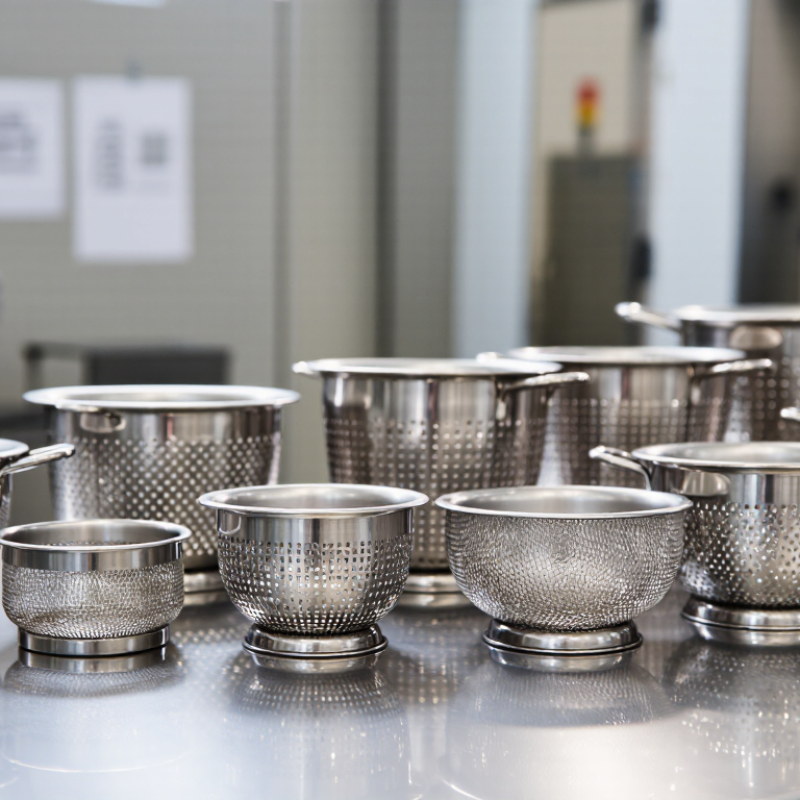
Filter baskets are removable screens that capture solids while allowing liquids or gases to pass through. Common designs use perforated plate, woven wire mesh, or wedge-wire slots. The right opening depends on particle size, flow rate, and how often operators can clean the basket. A very fine screen may trap more debris, but it can also clog quickly. That trade-off matters.
Stainless steel is widely used where corrosion resistance and repeated cleaning are important. Carbon steel can suit less corrosive services, while higher-alloy metals may be considered for demanding temperatures or chemical exposure. Material compatibility should be checked against the actual fluid, not just a general industry label. Small details matter: a poorly fitted seal can let solids bypass the screen.
In water treatment, baskets protect pumps and downstream equipment from leaves, grit, and pipe scale. Food processing and chemical plants may use them for different fluids and cleaning routines. A supplier’s useful expertise shows in clear drawings, documented material specifications, and practical guidance on mesh openings and pressure drop. Yet paperwork cannot replace a real operating trial. I would also question any claim that one basket suits every installation.
Assessing global filter basket suppliers starts with the operating conditions, not a catalog photograph. Confirm the required mesh opening, wire diameter, basket dimensions, and expected flow rate. A basket used in a hot, corrosive process may need a different alloy from one handling cool water. Ask suppliers to identify material grades and provide traceability documents for the parts they quote.
Manufacturing consistency matters. Request dimensional inspection records and details about weld quality, edge finishing, and pressure or flow testing. If the basket must fit an existing housing, compare its drawings with the installed unit and check tolerances at connection points. A small mismatch can cause bypass or slow maintenance. That sounds obvious. It is often missed.
Compare lead times, minimum order quantities, replacement-part availability, and technical support across regions. Ask how the supplier handles a failed inspection and whether sample baskets can be evaluated under realistic conditions. References from similar applications can help, but they do not replace your own checks. A polished catalog may hide limits in capacity or customization. Supplier rankings are useful starting points, not proof of suitability; even a careful assessment can miss details when process data is incomplete.
Worldwide filter basket suppliers often specialize in different applications rather than serving every industry equally. One profile focuses on custom stainless-steel baskets built to match exact vessel dimensions. Another supplies standard replacements for common filtration housings. A third produces fine-mesh baskets for capturing small particles. A fourth prioritizes reinforced rims and handles for repeated cleaning. A fifth serves food and beverage processors with smooth, easy-to-inspect surfaces. Small differences matter.
Other leading suppliers include specialists in heat-resistant materials, makers of compact batches for pilot plants, and contract manufacturers producing baskets to customer drawings. A ninth profile is a regional distributor offering several materials and quick access to replacement parts. A tenth is an engineering-led supplier that helps select mesh openings and basket geometry. These profiles are not a universal ranking; actual performance depends on operating conditions. A neat catalogue can still leave unanswered questions about tolerances or weld quality.
Tips: Compare mesh opening, wire diameter, material grade, and finished dimensions. Ask for a drawing, sample, and inspection records before ordering. Check how the basket handles cleaning and flow in your actual system. Specifications can look complete, yet one overlooked detail may still cause a poor fit.
A useful comparison of the top 10 filter basket suppliers worldwide should look beyond catalog size. Check whether each supplier can control wire diameter, opening size, weld quality, and basket dimensions. Ask for sample inspection records and material traceability documents. Relevant quality certifications can indicate a managed process, but they do not prove that a specific basket meets your operating conditions. Confirm which standards apply to the product and material. Small details matter: a rough rim can complicate cleaning, while a poorly supported handle may bend under load.
Tips: Send a drawing with tolerances, operating temperature, fluid type, and cleaning method. Request a sample before approving a production run. Compare the sample against your actual assembly, not just the drawing. Short lead times are helpful, but only if inspection steps remain clear.
Customization capability varies. Some suppliers offer only standard perforations; others can adjust mesh, alloy, edge finish, handles, and batch labeling. Ask how design changes affect tooling costs and delivery dates. Also clarify minimum order quantities, inspection frequency, and how defects are handled. A polished quotation is not enough. I have seen specifications look complete while leaving the rim finish undefined—a small omission, but one worth catching early.
| Comparison Profile | Typical Sourcing Region | Common Basket / Filter Types | Materials Commonly Offered | Manufacturing Capabilities | Customization Potential | Certification Evidence to Request | Best Fit |
|---|---|---|---|---|---|---|---|
| 1. Precision woven-mesh specialist | Europe and North America | Woven-wire baskets, mesh liners, strainers, and removable screens | 304/304L and 316/316L stainless steel; other alloys by specification | Mesh selection, cutting, rolling, seam joining, and basket assembly | High Mesh opening, wire diameter, dimensions, handles, and edge finishing | Current ISO 9001 certificate, material test reports, and traceability records where required | Fine particle retention and repeatable mesh specifications |
| 2. Perforated-sheet basket fabricator | North America and Europe | Perforated baskets, strainer baskets, and punched-sheet screens | Stainless steel, carbon steel, and selected corrosion-resistant alloys | Sheet punching or laser cutting, forming, welding, and finishing | High Hole diameter, pitch, open area, shape, reinforcement, and connections | Quality-system certificate, material grade documentation, and weld inspection records as applicable | Rigid baskets, larger openings, and applications requiring structural strength |
| 3. Wedge-wire screen manufacturer | Europe, North America, and East Asia | Wedge-wire cylinders, panels, intake screens, and process baskets | Stainless steel grades and selected nickel-based alloys, subject to design | Profile-wire forming, resistance welding, screen assembly, and dimensional inspection | High Slot width, wire profile, support spacing, and screen geometry | Documented slot-size inspection, material certificates, and applicable quality-system records | Continuous slots, drainage, and applications where screen geometry is critical |
| 4. Sintered-metal filter producer | Europe, North America, and East Asia | Sintered porous-metal elements, discs, cartridges, and basket inserts | Stainless steel powders and other sinterable metals offered by the producer | Powder preparation, compaction, sintering, sizing, and porosity testing | Medium–High Porosity, permeability, dimensions, and element configuration | Material and porosity test data; quality-system documents; application-specific compliance evidence | Porous media and applications needing a rigid, cleanable metal filter element |
| 5. Fine-wire and multilayer mesh fabricator | East Asia, Europe, and North America | Multilayer mesh baskets, laminated screens, and fine filtration inserts | Stainless steel mesh and compatible support materials | Mesh layering, spot or seam welding, forming, and edge reinforcement | High Layer count, mesh sequence, support structure, and basket profile | Mesh specifications, layer construction records, material certificates, and dimensional inspection results | Compact assemblies requiring several filtration layers or support layers |
| 6. Heavy-duty industrial basket fabricator | North America, Europe, and South Asia | Coarse strainer baskets, pump baskets, and reinforced process baskets | Stainless steel, carbon steel, and project-specified metals | Plate and sheet fabrication, structural welding, reinforcement, and repair | High Load-bearing features, lifting points, flanges, and equipment interfaces | Welding procedure and welder records where applicable, inspection reports, and material traceability | Large baskets, demanding mechanical loads, or replacement parts for installed equipment |
| 7. Food- and sanitary-process filter fabricator | Europe and North America | Sanitary strainers, cleanable baskets, and process-line screen assemblies | Commonly specified stainless steel grades; confirm grade and surface finish for each order | Forming, hygienic weld finishing, polishing, and cleanable assembly design | Medium–High Surface finish, sanitary connections, drainability, and clean-in-place features | Request applicable food-contact declarations, material traceability, finish records, and current certificates | Food, beverage, and other hygienic process applications |
| 8. Chemical-process alloy specialist | Europe, North America, and Japan | Corrosion-resistant baskets, screens, and custom alloy filter assemblies | Stainless steels and selected nickel-based or other corrosion-resistant alloys | Alloy-specific fabrication, forming, welding, and project documentation | Medium–High Alloy selection, thickness, weld design, and process-specific geometry | Material test reports, heat/lot traceability, and any project-required welding or inspection documentation | Corrosive or elevated-temperature service after materials compatibility review |
| 9. Polymer and non-metallic basket producer | East Asia, Europe, and North America | Molded or machined filter baskets, screens, and non-metallic housings | Application-dependent thermoplastics and engineering polymers | Injection molding, machining, polymer welding, or screen integration | Medium Shape, polymer grade, fittings, and integrated screen features | Request resin grade documentation, chemical compatibility data, and applicable regulatory declarations | Applications where low weight, electrical insulation, or metal-free construction is needed |
| 10. Custom OEM filter-assembly supplier | Global; production location varies by project | Customer-designed baskets, screen packs, and assemblies for original equipment | Specified by drawing, bill of materials, or application requirements | May coordinate cutting, forming, welding, finishing, inspection, and packaging | Very high Drawing-based production, prototypes, private-label packaging, and repeat orders | Verify the actual manufacturing site, quality-system scope, material records, inspection plan, and change-control process | OEM programs requiring coordinated design, documentation, and repeatable production |
Note: This is a representative capability comparison, not a verified ranking or a list of named suppliers. Capabilities and certifications vary by factory, product, and order. Confirm current certificate validity and scope, material grades, tolerances, test methods, and regulatory requirements directly with each prospective supplier before purchasing.
When comparing filter basket suppliers, start with the process, not the catalogue. Define the fluid, operating temperature, pressure, flow rate, and particle size you need to retain. Ask for material certificates, mesh or perforation tolerances, weld details, and dimensional drawings. Small gaps matter. A basket that fits a housing but deforms during cleaning can cause bypass or costly downtime. Request evidence from comparable operating conditions, and check whether examples are verifiable. Specifications should reflect actual service, not just a sales sheet.
Assess manufacturing consistency and technical support. Ask how each batch is inspected, how defects are recorded, and whether replacement baskets can follow the same drawing. Check lead times, minimum quantities, packaging, and response times for technical questions. For corrosive or abrasive duties, confirm material compatibility with a qualified engineer; a generic stainless grade is not enough. If possible, inspect a sample or run a controlled trial under normal flow. It may reveal issues. Supplier selection is rarely tidy: price, delivery, and service can conflict. Record the trade-offs and review them after the first maintenance cycle.
Typical chromium content ranges in common stainless steel grades used for industrial equipment, including filter baskets.
When comparing suppliers, ask them to confirm the basket material grade and provide material traceability. Chromium content is one composition reference, not a standalone measure of corrosion resistance; suitability also depends on the process fluid, temperature, and operating conditions. Typical composition ranges are based on ASTM A240/A240M.