
Email Id: sale@adctooling.com
An Ultrasonic Disperser uses high-frequency sound to break agglomerates and support mixing, emulsification, and particle-size reduction. In laboratories and production settings, results depend on more than the unit’s rated power. Probe design, sample volume, processing time, temperature control, and material compatibility all matter. Small details can change the outcome.
This guide introduces ten manufacturers in China and offers practical points for comparing their equipment. It considers product range, technical documentation, customization options, quality controls, and after-sales support. Buyers should also check whether stated specifications match their own materials and operating conditions. A machine tested with a small water sample may behave differently with a dense slurry or heat-sensitive formulation. That gap deserves attention.
Rankings can vary with application, budget, and the evidence available; they should not replace direct supplier checks. Request clear specifications, operating guidance, and relevant test data before making a decision. Ask how the supplier handles probe wear, replacement parts, and service inquiries, too. These questions may seem basic. They are useful. This overview aims to make the comparison clearer, while recognizing that no single manufacturer suits every process. Verify claims independently, and treat unusually broad performance promises with care.
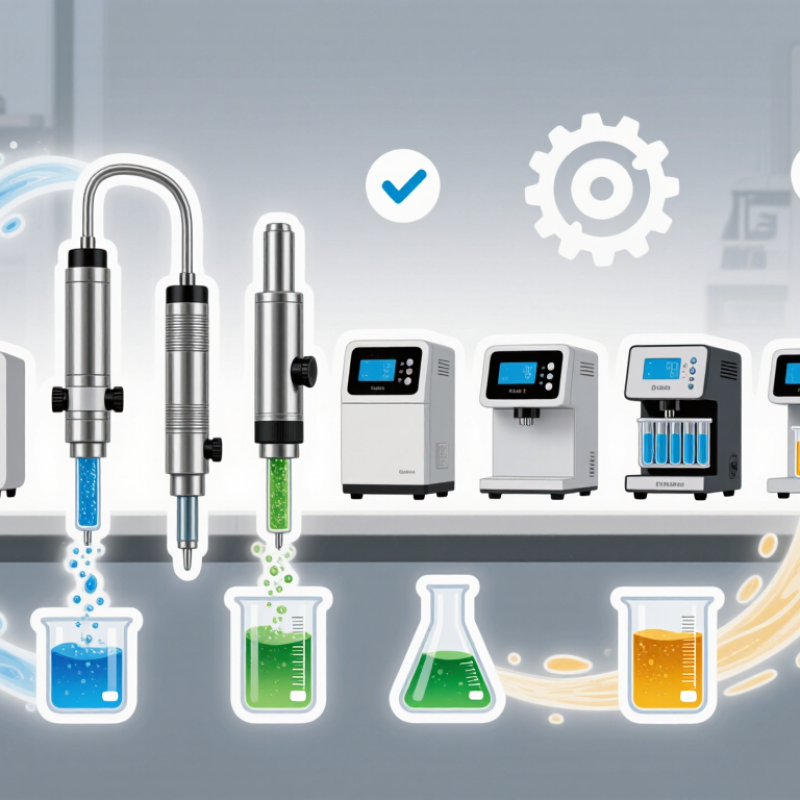
China Top 10 Ultrasonic Disperser Manufacturers
Ultrasonic Dispersers: Operating Principles and Industrial Applications
An ultrasonic disperser converts electrical energy into high-frequency mechanical vibration. A probe transfers that vibration into a liquid, where rapid pressure changes form and collapse tiny cavitation bubbles. Their collapse creates localized shear forces and microjets. These forces can break apart agglomerates and help distribute particles through a liquid. The result depends on more than power: probe depth, batch volume, viscosity, and processing time all matter. Heat can build quickly.
In industrial production, ultrasonic dispersion is used for coatings, inks, ceramic slurries, cosmetics, and other liquid formulations. For example, a poorly dispersed pigment may leave visible specks on a coated panel. A well-controlled process can improve uniformity, but it does not guarantee a stable product. Formulation chemistry still matters. Scale-up also takes care; a setting that works in a small beaker may not deliver the same energy throughout a larger tank. That part is often underestimated.
Tips: Keep the probe submerged and away from vessel walls. Track temperature during trials, and compare samples at consistent intervals. Record amplitude and processing time. A simple log can reveal patterns, though it will not explain every result.
| No. | Industrial Application | Operating Principle | Typical Materials or Process | Main Process Contribution | Practical Consideration |
|---|---|---|---|---|---|
| 1 | Nanomaterial dispersion | Ultrasonic vibration creates cavitation in a liquid; collapsing bubbles generate localized shear and microstreaming. | Carbon nanotubes, graphene, and other fine powders dispersed in a liquid medium. | Helps break up agglomerates and improve distribution through the liquid. | Powder wetting, viscosity, concentration, and heat buildup can affect dispersion results. |
| 2 | Paints and coatings | Cavitation and acoustic streaming apply mechanical forces to pigment agglomerates. | Pigments and functional fillers in coating formulations. | Supports deagglomeration and more uniform pigment distribution. | Formulation compatibility and temperature control should be considered. |
| 3 | Inks and printing materials | High-frequency probe motion transfers energy into the liquid and promotes particle breakup. | Pigment dispersions and other particulate ink components. | Can assist with dispersion uniformity in suitable formulations. | Excessive processing may heat the batch or affect sensitive formulation components. |
| 4 | Pharmaceutical suspensions | Acoustic cavitation and fluid motion help disperse solid particles in a liquid. | Suspensions and development-scale liquid formulations. | Can reduce visible particle clustering and support a more even suspension. | Validated process conditions and product-specific safety requirements are essential. |
| 5 | Cosmetics and personal care | Ultrasonic energy promotes mixing and particle deagglomeration in liquid formulations. | Lotions, creams, pigment-containing products, and liquid dispersions. | Supports uniform distribution of selected ingredients. | Formulation temperature and sensitivity of ingredients should be monitored. |
| 6 | Food and beverage processing | Cavitation-induced shear and streaming act on dispersed components in a liquid. | Selected emulsions, suspensions, and ingredient dispersions. | May assist mixing or dispersion in processes designed for ultrasonic treatment. | Equipment design, sanitation, and food-process regulations must be addressed. |
| 7 | Battery materials | Ultrasonic cavitation and shear help distribute fine particles within a liquid slurry. | Electrode slurries containing active materials, conductive additives, and binders. | Can help break up agglomerates and improve slurry homogeneity. | Slurry viscosity, solids loading, and material sensitivity influence process selection. |
| 8 | Ceramics and advanced materials | Acoustic forces act on particles suspended in a liquid, assisting deagglomeration. | Ceramic powders and other fine inorganic particles in liquid suspensions. | Helps produce a more uniform particle distribution before downstream processing. | Abrasive solids can cause probe wear; equipment materials and maintenance matter. |
| 9 | Wastewater and environmental treatment | Cavitation produces localized physical effects in the liquid and can enhance contact between process components. | Selected liquid treatment processes and laboratory or pilot-scale studies. | Can support mixing or treatment steps when integrated into a suitable process. | Effectiveness depends on water composition, reactor design, and treatment objectives. |
| 10 | Biotechnology and laboratory research | Probe-generated ultrasonic energy creates cavitation and intense local fluid motion. | Sample preparation, cell disruption, and small-volume research procedures. | Provides a controllable means of applying mechanical energy to liquid samples. | Heat-sensitive samples may require cooling and carefully controlled treatment. |