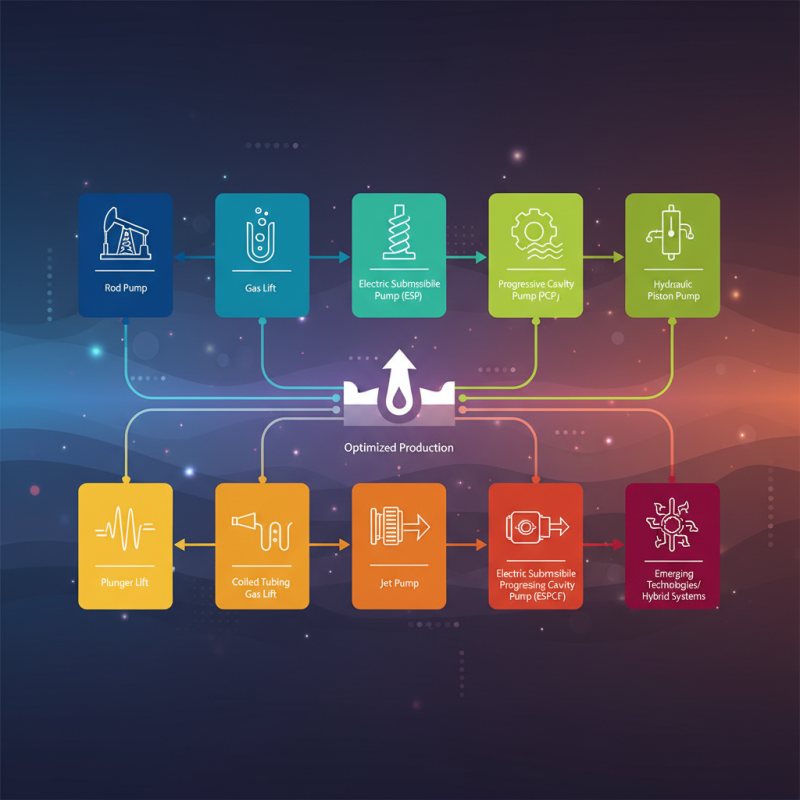
Top 10 Artificial Lift Technologies You Should Know About?
Artificial Lift Technologies play a crucial role in optimizing oil and gas production. These technologies help extract hydrocarbons from wells that lack sufficient pressure. Various methods exist, each with unique advantages and challenges.
The understanding of these technologies is essential for effective resource management. While some methods, like gas lift, are well-established, others are evolving. Continuous advancements are evident, but not every technology suits every scenario.
Exploring the top 10 Artificial Lift Technologies reveals their significance in today's energy landscape. However, one must recognize that no solution is flawless. Each technology requires careful consideration and expert evaluation. It's a journey of balancing efficiency and cost-effectiveness.
Understanding Artificial Lift: Definition and Importance
Artificial lift technologies play a crucial role in the oil and gas industry. These systems enhance the flow of fluids from wells by reducing the pressure. A report by the International Energy Agency highlights that almost 90% of oil wells utilize some form of artificial lift. This significant use underscores its importance in maintaining production rates.
Understanding the function of these technologies is essential for optimizing performance. Artificial lift can mitigate production decline, especially in mature fields. According to a study by the Society of Petroleum Engineers, proper application can increase production by up to 50%. However, selecting the wrong technology can lead to inefficiencies and increased operating costs. For many operators, the complexity of choices available complicates the decision-making process.
Some operators may overlook the latest advancements in artificial lift. Innovative solutions exist, but not all companies adopt them. A report from Wood Mackenzie indicates that outdated systems can reduce overall efficiency significantly. Failing to assess and upgrade technologies can hinder long-term growth. Thus, understanding the nuances of these systems is vital for maximizing resource extraction and achieving sustainability.
Types of Artificial Lift Technologies in Oil and Gas Production
Artificial lift technologies play a crucial role in oil and gas production. They enhance the recovery of hydrocarbons from wells that may not naturally flow to the surface. Understanding these technologies can help optimize production rates.
One common type is the beam pump system. This method uses a surface-based pump and a rod to lift fluids. It is widely used due to its simplicity and effectiveness. Another type is the electrical submersible pump (ESP). This system is located downhole and uses electrical energy to lift fluids effectively. Both systems have pros and cons that must be evaluated carefully. Beam pumps are robust but can struggle with heavy oil, while ESPs require more maintenance.
Gas lift is another technology worth mentioning. It injects gas into the well, reducing fluid density and enabling flow. This technique can be complex and may not work efficiently in every well. Additionally, progressive cavity pumps (PCPs) offer a different approach, using a rotating mechanism to lift fluids. Each of these technologies requires careful consideration. Every oil well has unique challenges. The effectiveness of these systems can vary, leading to frustrations in operations. Understanding these nuances is vital for better decision-making.
In-depth Exploration of Pumping Systems for Artificial Lift
Artificial lift technologies play a crucial role in oil and gas production. They enhance hydrocarbon recovery from wells that cannot flow naturally. Various pumping systems exist, each with unique applications and efficiencies. A significant report from the Society of Petroleum Engineers indicated that over 80% of oil wells rely on artificial lift.
One widely used system is the Electric Submersible Pump (ESP). This technology can increase production rates significantly, sometimes doubling output. However, ESPs can face challenges, such as high operational costs and complex maintenance. Another common method is the Rod Pump, known for its simplicity and reliability. Yet, it often falls short in harsh environments, limiting its adaptability.
The recent industry analysis shows that advancements in pumping systems are ongoing. New materials and design improvements are emerging. However, many operators still grapple with choosing the most effective system for their specific conditions. This often results in suboptimal performance and unnecessary expenses. It’s essential for companies to consider both technological capabilities and site-specific challenges when selecting their lifting solutions.
Comparative Analysis of Gas Lift and Electrical Submersible Pumps
Gas lift and electrical submersible pumps (ESPs) are two prominent artificial lift technologies in the oil and gas industry. Gas lift utilizes gas to lighten the fluid column in the well, promoting flow to the surface. This method is particularly effective in wells with lower production rates. However, the efficiency of gas lift can be affected by factors like gas availability and well conditions. Regular monitoring is essential to adjust gas injection rates for optimal performance.
On the other hand, electrical submersible pumps offer a powerful alternative for lifting fluids. They are installed deep within the well and can handle higher flow rates. ESPs excel in wells with high viscosity fluids, often outperforming other methods. Yet, their reliance on electricity makes them vulnerable during power outages or fluctuations. Maintenance can be complicated and expensive, as accessibility is limited. The choice between gas lift and ESPs often depends on specific well conditions and production goals. Each comes with unique challenges that require careful consideration and planning.
Top 10 Artificial Lift Technologies: Comparative Analysis of Gas Lift and Electrical Submersible Pumps
Future Trends and Innovations in Artificial Lift Technologies
Artificial lift technologies are evolving rapidly. These systems help enhance oil and gas production from wells. As demands increase, so does the need for innovation. New trends focus on efficiency and sustainability.
For instance, electrical submersible pumps are becoming smarter. They can adapt to changing conditions in real-time. This adaptability leads to better performance and reduced energy consumption.
Emerging technologies also include new materials and designs. These advancements make systems lighter and more resistant to wear. Moreover, advanced data analytics play a key role. They provide valuable insights into operating conditions. However, data integration is still a challenge in many cases. Companies often struggle to utilize this information effectively.
The landscape of artificial lift continues to shift. With each innovation, there are still lessons to learn and improvements to apply.