
Email Id: sale@adctooling.com
China has become a critical manufacturing base for electric vehicle drivetrains. According to the International Energy Agency’s Global EV Outlook 2024, nearly 14 million electric cars were sold worldwide in 2023. China accounted for more than 60% of those sales. The China Association of Automobile Manufacturers also reported 9.495 million new energy vehicles sold domestically in 2023.
That scale is changing the e-axle market. An e-axle integrates the motor, inverter, reduction gear, and differential into one compact assembly. It can reduce wiring, save installation space, and support faster vehicle development. For global buyers, the best EV e-axle supplier China offers more than a competitive unit price. Buyers must examine efficiency maps, peak torque, thermal control, software compatibility, testing records, and production consistency.
Wang Chuanfu, chairman of BYD, described the broader industry direction clearly: “The first half of the competition is electrification, and the second half is intelligence.” His statement also applies to e-axles. Hardware remains essential, but control software and system integration increasingly separate strong suppliers from ordinary manufacturers.
This list is not a perfect ranking. Public data rarely separates e-axle revenue from complete powertrain sales. Supplier capabilities can also change quickly. Therefore, this guide compares ten leading Chinese companies through practical indicators, including product range, manufacturing experience, overseas support, certification readiness, and customer references. Real factory audits still matter. A polished brochure cannot reveal every vibration, heat, or calibration problem.
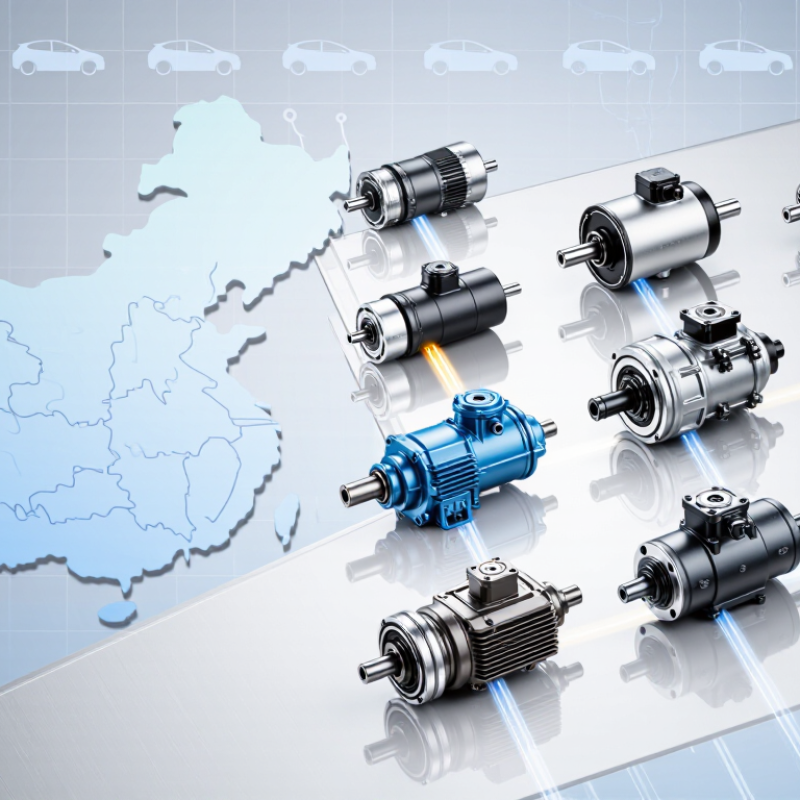
China’s top 10 EV e-axle suppliers serve a rapidly expanding global market. The IEA Global EV Outlook 2024 reported nearly 14 million electric cars sold worldwide in 2023. Electric cars exceeded 18% of global new-car sales.
An e-axle integrates the motor, inverter, reduction gearbox, differential, and housing. This compact structure reduces wiring and installation space. It also transfers battery energy into wheel torque with fewer mechanical connections.
Buyers should examine continuous power, peak torque, system voltage, torque response, and power density. Efficiency across real driving speeds matters more than one laboratory maximum. The U.S. Department of Energy notes that modern electric drive systems can achieve efficiency above 90% under suitable operating conditions. Still, efficiency can fall sharply during high-load climbing or cold starts.
Thermal control deserves close inspection. Oil cooling, coolant passages, sensor placement, and inverter temperature limits affect sustained performance. Noise, vibration, and harshness testing should cover launch, gear changes, and low-speed reversing.
Critical checks include endurance cycles, sealing performance, electromagnetic compatibility, and functional-safety evidence aligned with ISO 26262 practices. Public datasheets are often incomplete. That is a weakness. Global buyers should request dynamometer results, efficiency maps, warranty assumptions, and sample validation data from each shortlisted supplier. A higher peak number is not always better. Real fleet duty cycles reveal more.
For global buyers, evaluating China’s EV e-axle suppliers requires more than comparing unit prices. The IEA reported nearly 14 million electric cars sold worldwide in 2023, with China representing about 60% of sales (IEA, Global EV Outlook 2024). This scale creates strong manufacturing experience, but export readiness still varies. Ask for verified data on peak power, continuous torque, efficiency maps, thermal limits, and noise, vibration, and harshness performance.
Look beyond the brochure. A credible supplier should provide endurance-test records, failure-analysis reports, traceability procedures, and documented control plans. Request validation across hot, cold, dusty, humid, and high-altitude conditions. An e-axle that performs well on a test bench may behave differently after months of road exposure. I would not accept one laboratory result as proof. Repeated testing matters.
Global compliance also needs early review. Check electromagnetic compatibility, functional safety processes, cybersecurity controls, battery-voltage isolation, and applicable vehicle regulations in each target market. ISO 26262 and ISO/SAE 21434 offer useful reference points for safety and cybersecurity management. Examine production consistency through process-capability data, incoming inspection records, and independent audits. Lead times, spare-part access, software update procedures, and local technical support can decide project success. The weakest detail may matter most. A practical sourcing team should visit the factory, inspect traceability at the assembly line, and compare verified field data with promised specifications.
China’s EV e-axle sector includes suppliers with different engineering strengths and production strategies. Supplier One focuses on compact passenger-car units, using integrated motors, inverters, and reducers. Supplier Two develops high-voltage systems for larger electric vehicles, with strong thermal management testing. Supplier Three serves commercial fleets and emphasizes durable housings, easy service access, and long operating cycles.
Supplier Four is known for flexible customization, supporting different gear ratios and mounting layouts. Supplier Five concentrates on lightweight aluminum structures, helping reduce vehicle mass without sacrificing stiffness. Supplier Six offers cost-conscious platforms for high-volume production, although buyers should examine noise data carefully. Supplier Seven builds systems for demanding road conditions and places greater attention on sealing and corrosion resistance.
Supplier Eight develops dual-motor architectures for improved traction and control. Supplier Nine combines axle design with software calibration, which can simplify vehicle integration. Supplier Ten provides development support, sample testing, and localized production assistance for overseas customers. This can shorten communication cycles.
A reliable evaluation should include more than rated power. Ask for efficiency maps, endurance results, warranty procedures, and traceable quality records. Factory visits can reveal assembly discipline, testing equipment, and storage conditions. Some suppliers present impressive prototypes but provide limited long-term data. That is a weakness worth recognizing. Global buyers should compare real operating evidence, certification readiness, spare-parts support, and response times before selecting an e-axle partner.
For global buyers, comparing China’s top ten EV e-axle suppliers requires more than checking peak power. Product reviews should examine voltage platforms, continuous torque, reduction ratios, axle weight, and cooling performance. A compact 400V unit may suit urban vehicles, while an 800V system can reduce charging losses and support larger platforms. Some suppliers offer single-motor, dual-motor, and integrated drive units with inverter, gearbox, and differential in one housing. Packaging matters. A lower center of gravity can simplify vehicle integration.
Technology maturity is visible in practical details. Oil-cooled motors, silicon carbide inverters, low-noise gears, and functional safety software can improve efficiency and durability. However, laboratory efficiency figures may not reflect winter roads, heavy loads, or repeated hill climbs. Buyers should request independent test conditions, not only presentation data. Prototype support, calibration tools, and software update procedures also deserve attention. These details often decide launch risk.
Capacity comparisons need careful verification. Annual output, automated assembly lines, machining depth, and spare-part availability should be reviewed together. A factory may state high capacity, but confirmed production slots can be much smaller. Certification checks should include ISO 9001, IATF 16949, ISO 14001, and relevant ISO 26262 processes, with valid certificates and clear scopes. Audit production samples, traceability records, endurance reports, and warranty terms. No supplier is perfect. A transparent supplier that admits design limits may be more reliable than one promising every specification.
Selecting an E axle supplier requires more than comparing quoted prices. Global buyers should examine design capability, production discipline, and after-sales responsiveness. Ask for test records covering efficiency, thermal performance, noise, vibration, and durability. Review whether the supplier controls the motor, inverter, gearbox, and software integration internally. Request traceable material records and calibrated inspection data. A polished presentation proves little.
A practical evaluation begins with a technical workshop. Share vehicle weight, wheel torque, voltage range, axle ratio, duty cycle, and installation limits. The supplier should provide assumptions, drawings, tolerances, and validation milestones. Request a sample unit before signing volume commitments. Measure temperature, acoustic levels, leakage, and CAN communication during representative road tests. Independent testing can expose gaps early. It costs money, but rushed tooling costs more.
Partnership quality depends on communication after the purchase order. Define response times, spare-part access, software change control, warranty boundaries, and field-failure reporting. Visit the factory when possible, and observe end-of-line testing rather than staged demonstrations. Check capacity using actual shift records, not optimistic forecasts. No supplier will be flawless. Even experienced buyers may overlook connector sealing or cold-weather calibration. Build a corrective-action process with named owners and dates. A lower price may still become expensive through engineering changes, delays, and vehicle downtime.