
Top 10 WPC Decking Material Types for Global Buyers?

Choosing the right Wpc Decking Material is more than comparing colors, prices, and surface textures. Global buyers must examine polymer type, wood-fiber content, production quality, and intended climate. A board that performs well beside a dry Mediterranean pool may react differently in humid coastal weather. Small details matter. We have seen samples with attractive grain patterns but uneven edges, weak clips, or inconsistent color. These issues can become expensive after installation.

This guide introduces ten WPC decking material types commonly considered for residential, commercial, and public projects. Each category is discussed through practical buying questions: How does it handle moisture, heat, foot traffic, fading, and regular cleaning? We also consider capped and uncapped profiles, hollow and solid structures, co-extruded surfaces, recycled content, and different wood-plastic formulations. Product datasheets deserve careful reading. Factory claims should be checked against test reports, installation guidance, and warranty conditions. Independent verification is valuable, especially when shipping across regions with different climates and building expectations.

The goal is not to declare one universal winner. There is none. A balcony, marina walkway, hotel terrace, and garden path need different performance priorities. Buyers should request physical samples, inspect the locking system, and confirm dimensions before placing large orders. Ask about batch consistency too. It is easy to underestimate freight, thermal movement, drainage, and replacement availability. Some recommendations may need revision as technologies and standards change. Still, a careful comparison can reduce avoidable risk and support a more reliable long-term purchase.
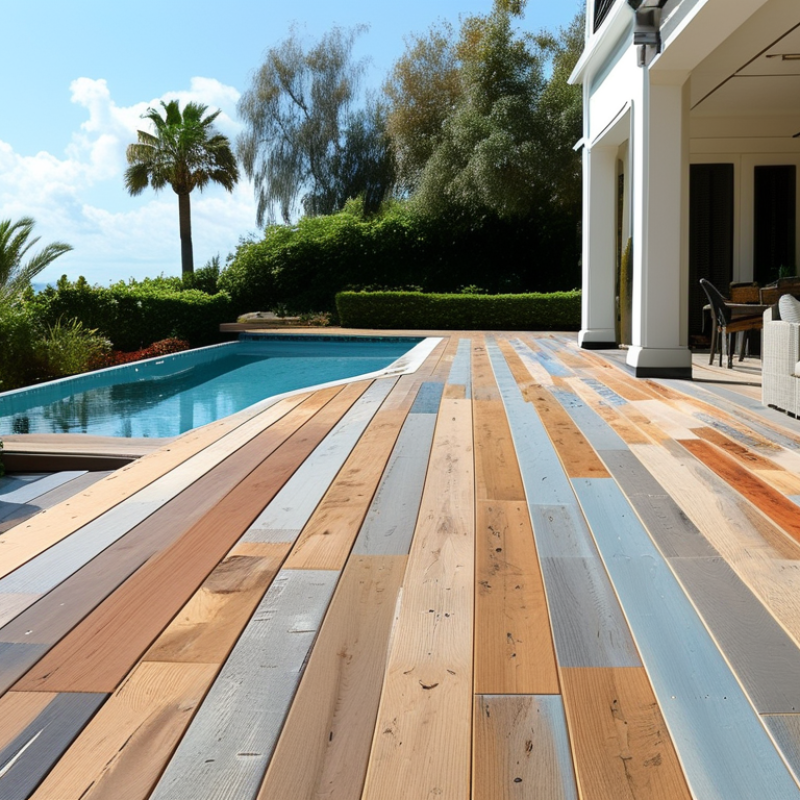
Top 10 WPC Decking Material Types for Global Buyers?

What WPC Decking Is and How Its Materials Are Classified

Top 10 WPC Decking Material Types for Global Buyers

WPC decking combines wood fibers or flour with thermoplastic polymers and performance additives. Heat and pressure shape these ingredients into boards. The wood component provides texture and stiffness. The polymer helps resist moisture and splitting. WPC still needs thoughtful specification. Strong sunlight, standing water, and poor ventilation can shorten its service life.

A practical classification includes wood-flour PE, wood-fiber PE, wood-flour PP, wood-fiber PP, PVC-wood composite, virgin-polymer WPC, recycled-polymer WPC, capped WPC, uncapped WPC, and mineral-reinforced WPC. These categories can overlap. A capped board may also contain recycled PE. A hollow profile may use any of them. This is imperfect, but it reflects real purchasing decisions better than one simple label.

Buyers should request the wood-to-polymer ratio, polymer source, moisture absorption, density, and expansion data. A 3.6-meter board should have clear support spacing requirements. Check whether the surface remains stable after wet and dry cycles. Examine cut edges for voids and uneven filling. Recycled content can reduce resource use, but its quality depends on sorting and processing control. Mineral fillers may improve stiffness, yet excessive filler can make boards brittle. Color samples also need outdoor testing, because showroom lighting hides fading. Installation guidance matters as much as material selection. Ventilation gaps, stainless fasteners, and correct joist spacing often decide whether a deck performs well.

The Main Wood Fiber and Polymer Combinations in WPC Decking

Top 10 WPC Decking Material Types for Global Buyers

WPC decking combines wood fiber with a polymer matrix, and the ratio shapes performance. Common blends use hardwood flour with HDPE, offering a warm appearance and strong moisture resistance. Softwood fiber with HDPE usually costs less, but it may show greater color variation. Recycled polyethylene adds environmental value, although batch consistency requires careful inspection. It feels natural. Yet, no blend is perfect.

Polypropylene paired with wood fiber creates a harder, more heat-resistant surface. This option suits sunny regions, but higher thermal movement can complicate installation. PVC and wood flour produce low water absorption and stable dimensions. The surface may feel less timber-like, especially under intense sunlight. Bamboo fiber with polyethylene is another growing combination, though its processing quality depends on drying and fiber preparation.

In project reviews, I check fiber content, polymer origin, moisture absorption, slip resistance, and expansion data together. A product with 60% wood is not automatically better than one with 45%. Excess fiber can increase swelling if the profile is poorly sealed. Climate changes everything. Buyers should request test reports based on recognized standards, such as ASTM or EN methods, rather than relying on attractive samples. Color fading, fastener spacing, and ventilation beneath the deck also deserve attention. Some technical sheets remain vague, and that is a warning sign worth questioning.

Ten Common WPC Decking Material Types for Global Buyers

Global buyers commonly encounter ten WPC decking material types. Hollow-core boards reduce weight and simplify rooftop handling. Solid-core boards offer stronger impact resistance for busy terraces. Capped WPC includes a protective polymer layer against stains and moisture. Uncapped WPC usually costs less but needs careful drainage and cleaning.

Co-extruded decking combines a wood-plastic core with an outer surface layer. Recycled wood-polyethylene boards support material reuse and provide a familiar timber appearance. Virgin polyethylene WPC often delivers more consistent color and processing quality. Polypropylene-based boards can provide higher stiffness, although installation temperatures require attention. PVC-wood decking resists water well but may feel less natural underfoot. Bamboo-plastic boards use bamboo fibers and can show distinctive grain patterns. These categories sometimes overlap, so suppliers should verify the actual formulation.

Tips: Ask for fiber content, resin type, board density, water absorption, and slip-test data. Request samples after outdoor exposure, not only fresh factory samples. Check the clip system, joist spacing, and expansion gap together. A dark board may become hot in direct sunlight. In my experience, attractive grain cannot compensate for poor drainage. Some specifications look impressive but lack independent testing. Buyers should compare test methods, warranty conditions, and local climate suitability before ordering.

Top 10 WPC Decking Material Types for Global Buyers
No. WPC Decking Material Type Typical Polymer Matrix Typical Wood or Natural-Fiber Content Main Material Characteristics Common Decking Profile Typical Applications Key Buying Considerations
1 Wood–HDPE Composite High-density polyethylene (HDPE) Approximately 50–70% by weight Good moisture resistance, impact performance, processability and outdoor durability. HDPE-based WPC is one of the most widely used formulations for exterior products. Hollow or solid boards; smooth, brushed or wood-grain surfaces Residential decks, balconies, terraces, boardwalks and outdoor platforms Check UV stabilizers, pigment stability, thermal expansion, fastener compatibility and recycled-content consistency.
2 Wood–PP Composite Polypropylene (PP) Approximately 40–70% by weight Relatively high stiffness and heat resistance compared with many polyethylene formulations. It can provide good dimensional performance when properly compounded. Usually solid or partially hollow boards High-use residential decks, commercial terraces and areas requiring increased rigidity Review low-temperature impact performance, weathering additives and the balance between stiffness and brittleness.
3 Wood–PVC Composite Polyvinyl chloride (PVC) Approximately 30–60% by weight Low water absorption and good resistance to insects and decay. PVC-based formulations can be relatively light and dimensionally stable. Hollow, foamed or solid boards Residential decking, roof terraces, pool surrounds and low-maintenance exterior areas Verify thermal movement, impact resistance, plasticizer use, fire classification and end-of-life recycling options.
4 Recycled-HDPE WPC Post-consumer or post-industrial recycled HDPE, sometimes blended with virgin HDPE Approximately 40–70% by weight Can reduce dependence on virgin polymer and support circular-material goals. Performance depends strongly on feedstock sorting, contamination control and compounding quality. Solid or hollow boards with capped or uncapped surfaces Public landscaping, residential projects and sustainability-focused developments Ask for recycled-content verification, batch consistency, odor control, contamination limits and mechanical test reports.
5 Capped or Co-Extruded WPC Wood–polymer core with a protective polymer outer layer Core commonly contains approximately 40–70% wood or natural fiber A polymer cap can improve resistance to staining, moisture ingress, fading and surface wear compared with an exposed composite surface. Mostly solid or hollow boards with a bonded protective shell High-traffic decks, hospitality areas, pool surrounds and demanding climates Inspect cap thickness, cap-to-core bonding, slip resistance, scratch behavior, color consistency and cut-edge protection.
6 Uncapped Wood–Polymer Composite HDPE, PP or PVC without a separate protective cap Approximately 40–70% by weight Usually more economical and easier to machine. The exposed composite surface may weather naturally and can be more sensitive to staining or moisture than capped products. Hollow or solid boards with brushed, embossed or grooved finishes Residential decks, garden paths, balconies and projects with controlled budgets Evaluate first-year color change, surface sealing, drainage design, cleaning requirements and allowable installation tolerances.
7 Mineral-Filled WPC Polyolefin or PVC matrix combined with mineral fillers such as calcium carbonate or talc Wood or natural fiber content varies; mineral filler may partially replace wood content Mineral fillers can increase stiffness and reduce material cost, but excessive filler may reduce impact strength and increase brittleness. Usually solid or reinforced hollow boards Decking requiring increased rigidity, reduced deflection or specific cost-performance targets Check filler percentage, density, screw-holding strength, impact test results and behavior during temperature changes.
8 Hollow-Core WPC Decking Commonly HDPE, PP or PVC composite Typically approximately 40–70% by weight Internal cavities reduce weight and material consumption. Hollow boards require suitable joist spacing and careful sealing or drainage design. Round-hole, rectangular-hole or honeycomb internal structure Balconies, rooftop terraces, residential decks and projects requiring easier handling Confirm board weight, cavity geometry, span tables, end-cap requirements, water drainage and resistance to crushing.
9 Solid-Core WPC Decking Commonly HDPE, PP or PVC composite Typically approximately 40–70% by weight Higher mass generally provides improved impact resistance, fastening flexibility and edge strength, although boards are heavier and use more material. Full solid section with grooved or side-grooved edges Commercial walkways, public areas, steps, heavy-use decks and complex cutting layouts Compare board weight, joist requirements, handling cost, thermal expansion and screw-holding performance.
10 Natural-Fiber WPC Polymer matrix reinforced with bamboo fiber, rice husk, flax, hemp or other plant fibers Approximately 40–70% by weight, depending on the formulation Can use agricultural or plant-based residues and provide a distinctive texture. Moisture sensitivity and fiber variability must be managed through proper compounding and surface protection. Solid, hollow or co-extruded boards Eco-oriented residential projects, landscaping, terraces and architectural applications Verify fiber source, moisture content, fungal resistance, color stability, certification and long-term outdoor test data.
Note: The percentages and performance descriptions are indicative industry ranges. Actual properties vary according to polymer grade, fiber species, additives, profile design, processing conditions and applicable regional standards.

How WPC Decking Types Differ in Performance and Applications

Top 10 WPC Decking Material Types for Global Buyers?

WPC decking types differ mainly in structure, surface protection, and fiber content. Solid polyethylene WPC offers strong impact resistance for busy terraces. Hollow polyethylene boards reduce weight and shipping costs. Capped WPC adds a polymer shell, improving stain and moisture resistance. Uncapped boards usually cost less, but require stricter drainage and cleaning. PVC-based decking resists water well and suits humid balconies. Hollow PVC profiles are lighter, though they can feel less substantial underfoot. Mineral-filled composites improve stiffness and dimensional stability. Bamboo-fiber composites provide a uniform appearance, while recycled-content boards support circular material strategies. Co-extruded profiles often perform best beside pools and commercial entrances.

Performance still depends on formulation and installation quality. ASTM D7032 evaluates structural performance for wood-plastic composite decking, while ASTM D7031 guides testing practices. Global market estimates also vary. Grand View Research valued the WPC market at about USD 7.14 billion in 2023, with a projected 7.5% CAGR through 2030. Fortune Business Insights reported a different 2024 estimate, near USD 7.93 billion, partly because its scope differs. Buyers should compare water absorption, flexural strength, slip resistance, UV exposure, and thermal movement data. A low-cost hollow board may suit a residential balcony, but not a high-traffic walkway. That distinction is often missed. No single WPC type wins every climate, and laboratory results may not fully predict coastal aging.

Key Buying Criteria for Selecting WPC Decking Worldwide

Global buyers should compare WPC decking by material structure, climate performance, and verified production quality. Common choices include hollow boards, solid boards, capped boards, uncapped boards, and recycled-content profiles. Hollow boards reduce weight and shipping costs, while solid boards usually offer stronger impact resistance. Capped surfaces can improve stain and moisture protection, but they may cost more.

Climate should guide the specification. In humid coastal areas, check water absorption, mould resistance, fastener compatibility, and drainage design. For regions with strong sunlight, request tested colour retention and heat expansion data. In cold markets, examine freeze-thaw performance and low-temperature brittleness. Ask for installation gaps based on local temperature changes. A fixed gap can fail across different climates.

I have seen buyers focus on price and overlook substructure quality. That mistake becomes visible when boards sag over uneven joists. Request technical data, batch records, test methods, and installation instructions from each supplier. Confirm whether recycled material comes from controlled sources, not just attractive marketing language. Surface texture matters too; a wet, brushed board can become slippery without suitable slip testing. Product samples should remain outdoors for several weeks before approval. It is imperfect, but practical. A sample may hide long-term fading, expansion, or colour variation. Check tolerances, warranty conditions, replacement procedures, and compliance documents before placing a large international order.

Top 10 WPC Decking Material Types for Global Buyers

Key Buying Criteria for Selecting WPC Decking Worldwide

The chart compares common WPC decking material structures using indicative midpoint values for density and water absorption. Lower water absorption generally supports better dimensional stability, while density affects weight, rigidity, transport cost, and fastening requirements.

Values represent typical engineering benchmarks found across international WPC product specifications, not company or brand data. Buyers should verify the product technical data sheet, slip-resistance classification, UV performance, fire rating, thermal expansion, and compliance with applicable standards such as EN 15534 or ASTM D7031.