What Are Orthopedic Spine Implants?
Orthopedic Spine Implants are medical devices used to support, stabilize, or replace structures in the spine. Common examples include pedicle screws, connecting rods, plates, interbody cages, and artificial discs. A surgeon may use these devices during procedures for conditions such as spinal instability, fractures, or degenerative disease. The choice depends on the patient’s anatomy, diagnosis, and treatment plan. These are not interchangeable parts.
The need for spinal care is substantial. The World Health Organization’s 2023 low back pain fact sheet estimated that 619 million people experienced low back pain in 2020. It projected that number could reach 843 million by 2050. That figure describes a health burden, not the number of people who need surgery or implants. Most back pain does not automatically require an operation.
Historical hospital data offer another useful perspective. The U.S. Agency for Healthcare Research and Quality reported that spinal fusion procedures rose from about 174,000 in 1998 to 413,000 in 2008, a 137% increase. The report is old, and it reflects U.S. inpatient care during that period. It does not prove that more surgery produced better outcomes. That distinction matters. Understanding implant types, materials, potential benefits, and risks can help readers interpret treatment discussions more carefully. A device is only one part of care; surgical judgment, healing, and follow-up matter too.
Definition and Purpose of Orthopedic Spine Implants
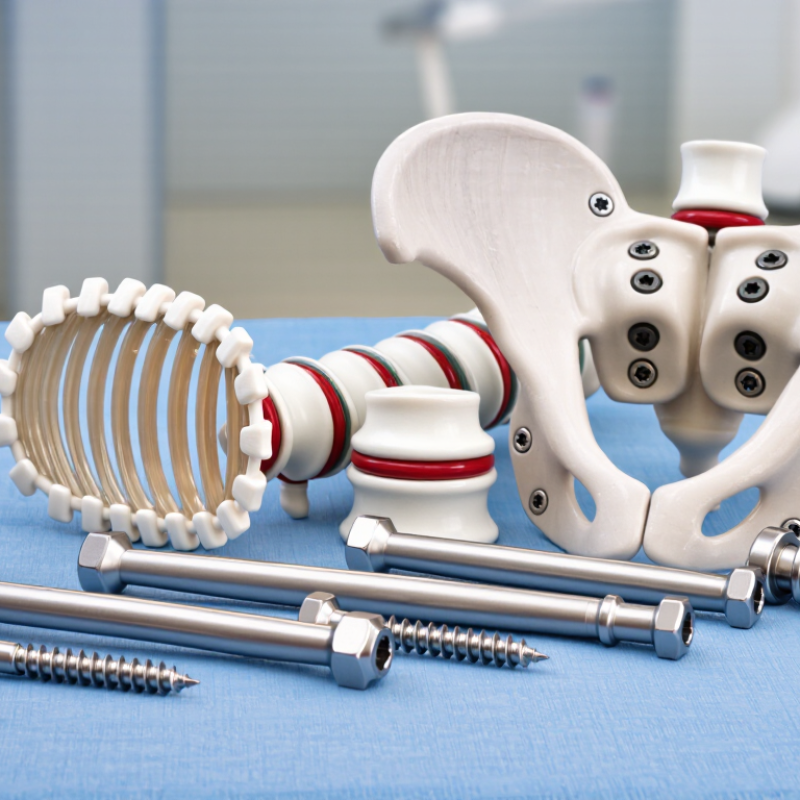
Orthopedic spine implants are medical devices placed during surgery to support, align, or stabilize parts of the spine. Common examples include screws and rods, plates, interbody cages, and artificial discs. Their purpose depends on the condition being treated. A cage may preserve space between vertebrae, while screws and rods can limit movement as bone heals after a fusion. Some devices support fusion; others are designed to preserve motion. They are not interchangeable.
The scale of spinal surgery makes the distinction important.
The Agency for Healthcare Research and Quality’s HCUP report, “Trends in Operating Room Procedures in U.S. Hospitals, 2001–2011,” recorded about 489,000 spinal fusion procedures in 2011, a 70 percent rise from 2001.
That figure counts procedures, not implant recipients, and it does not show whether surgery improved outcomes. Implants can provide structural support, but they do not directly repair nerve damage or guarantee pain relief. Small details matter. Device choice depends on anatomy, diagnosis, bone quality, and the surgeon’s plan. Even a technically sound implant may not resolve every symptom; that uncertainty deserves a clear discussion before surgery.
Spinal Conditions That May Require Implant Support
Orthopedic spine implants may support a spine that is unstable, deformed, fractured, or unable to fuse properly. A surgeon may consider screws and rods for vertebral slippage, severe scoliosis, or instability after removing bone to relieve nerve pressure. Cages can help maintain space between vertebrae during fusion. Implants may also be used after some fractures or tumor operations. The details matter. Low back pain alone rarely tells the whole story.
The World Health Organization estimated that 619 million people experienced low back pain in 2020. That figure describes a major health burden, not the number of people who need implants. The boundary is not always neat. Symptoms, examination findings, and imaging must fit together.
U.S. spinal fusion procedures rose from about 287,600 in 2001 to 488,300 in 2011, a 70% increase, according to the Healthcare Cost and Utilization Project’s 2014 Statistical Brief. More procedures do not prove that every operation was necessary. Implant support is generally considered when instability or deformity is significant, or when nonsurgical care has not helped enough. A scan alone is not enough. Decisions also depend on a person’s health, goals, and likely healing.
Common Types of Spine Implants and Their Functions
What Are Orthopedic Spine Implants?
Common Types of Spine Implants and Their Functions
Orthopedic spine implants are devices used to support, stabilize, or replace parts of the spine during selected procedures. Their purpose depends on the condition being treated, the spinal level, and a patient’s overall health. They do not work like a universal repair kit.
Pedicle screws and rods help hold vertebrae steady, often while bones fuse. Small interbody cages sit between vertebrae, helping maintain disc height and providing space for bone to grow. In some neck procedures, a plate and screws stabilize the front of the spine. Artificial discs may preserve more movement than fusion, but they suit only certain patients. Fit matters. The choice can be less straightforward than a scan suggests; symptoms, bone quality, and daily activity also matter. Each device has limits, and healing takes time.
Tips: Ask your spine specialist what each implant is meant to do, what alternatives exist, and how recovery may affect walking, lifting, or work. Bring a medication list and mention prior surgeries. If the explanation feels unclear, ask for a simple drawing. Discuss risks and follow-up imaging with your care team; implant choice is individualized.
Materials and Design Features Used in Spine Implants
Orthopedic spine implants combine materials and shapes intended to support or stabilize parts of the spine. Common materials include titanium alloys, cobalt-chromium alloys, stainless steel, and polyetheretherketone, often called PEEK. Titanium is relatively lightweight and can integrate with bone, while cobalt-chromium is stiff and wear-resistant. PEEK is radiolucent, so it may create less interference on certain medical images. Each material has trade-offs. Small details matter.
Design depends on the implant’s role. Screws anchor into vertebrae, and rods connect them to help limit movement during healing. Interbody cages sit between vertebrae; their openings can hold bone graft material, and their shape helps restore spacing. Some surfaces are textured or porous to encourage bone attachment, though results vary with patient health, anatomy, and surgical technique. A smooth-looking cage may still have carefully engineered edges and contact areas.
Engineers also consider fatigue, fit, and imaging needs. An implant must tolerate repeated everyday loads, but no design removes stress from surrounding bone. Surgeons select dimensions and configurations based on the condition being treated and the patient’s anatomy. Material labels alone do not tell the whole story; placement and clinical judgment matter too. And real bodies are not uniform.
How Implants Are Placed and What Recovery Involves
During spinal fusion, the surgeon places screws into selected vertebrae and connects them with rods to limit movement. A cage may hold bone graft between vertebrae. Fluoroscopy or other imaging helps guide placement; a postoperative scan may check alignment. The exact approach depends on the spinal level, diagnosis, and bone quality. Small incisions do not always mean an easy recovery.
After surgery, staff usually help patients sit, stand, and walk as soon as it is safe. Often, that is the same day or the next morning. An AHRQ HCUP Statistical Brief reported 488,300 spinal fusion procedures in 2011, a 70% increase from 1998. That volume is not a recovery forecast. Time in hospital and return to everyday tasks vary with the procedure, health, and home support. Some people go home within days; bone fusion takes much longer, often several months. Follow-up visits and imaging track healing. Keep walking as advised, and follow lifting and wound-care instructions. Pain can fluctuate. That part is easy to underestimate. Ask the surgical team which symptoms need prompt attention, since written instructions may not cover every concern.