
Email Id: sale@adctooling.com
Power Tool Organizers are used to control clutter, protect equipment, and make daily work safer. They hold drills, impact drivers, bits, chargers, batteries, and hand tools in visible positions. A technician should not dig through a dark drawer for a loose blade. That small delay can become a costly habit.
Market data shows why this category matters. Fortune Business Insights estimated the global power tools market at approximately USD 41.95 billion in 2023. Grand View Research also reports strong growth in the broader hand tools market, driven by construction, maintenance, and professional repair work. These reports do not isolate organizer sales perfectly. That limitation deserves attention. Still, expanding tool ownership creates a practical need for better storage.
Design expert Don Norman wrote, “Good design is actually a lot harder to notice than poor design.” His observation fits Power Tool Organizers closely. A well-designed organizer keeps a drill upright, prevents batteries from sliding, and leaves charging cables reachable. It should also reduce bending, searching, and accidental drops. OSHA guidance consistently emphasizes orderly work areas and proper storage as part of workplace safety. The organizer is not a miracle solution. Poor loading can still cause imbalance, damaged tools, or wasted space. However, when layout matches the user’s workflow, storage becomes part of productivity rather than an afterthought. This article explains what Power Tool Organizers are used for, where they perform best, and which design details deserve closer inspection.
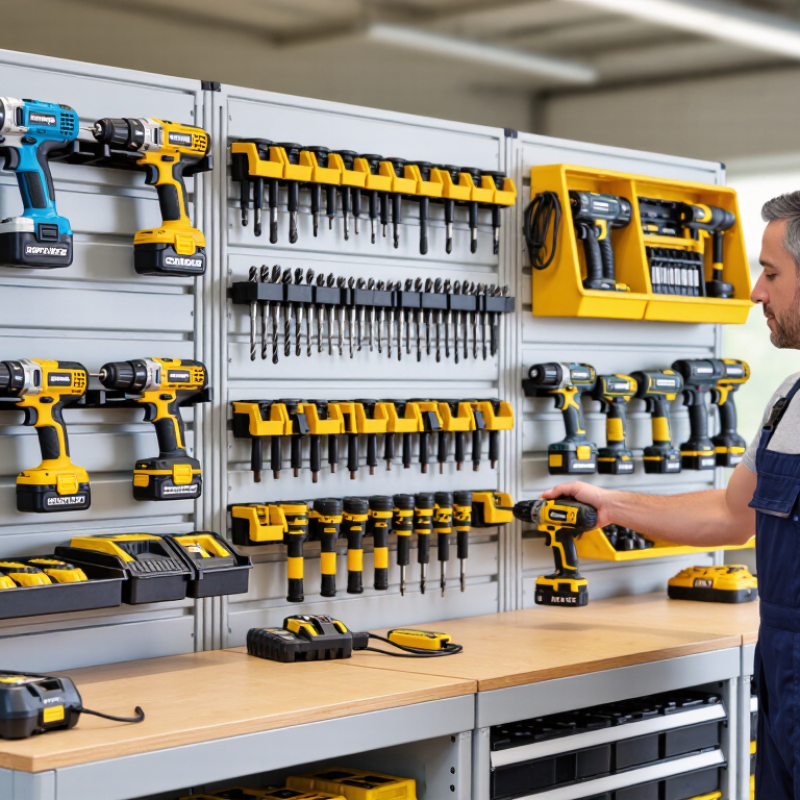
Power tool organizers are storage systems designed to keep drills, saws, drivers, and accessories arranged. Their core function is simple: reduce clutter and make tools easier to find. A well-designed organizer may include separate holders, drawers, wall panels, or fitted compartments. Each space protects a tool from unnecessary contact, dust, and accidental falls. It also keeps cables, batteries, bits, and blades from becoming a tangled pile.
These organizers support faster work and better tool control. When every item has a fixed position, workers can check missing equipment quickly. They can also return tools after use without disturbing the entire workspace. In practical workshop use, clear storage often prevents small accessories from disappearing under benches. It may also reduce hurried searching, which can lead to careless handling. However, organization is not magic. An overloaded compartment can still damage tools or create confusion. I have found that storage plans sometimes look efficient but fail when real projects bring extra equipment.
Tips: Store frequently used tools near hand level. Keep heavier equipment on lower shelves. Label small compartments clearly. Leave a little unused space. That space matters. Review the layout after several work sessions, because the first arrangement may not suit your actual habits.
Power tool organizers keep drills, saws, drivers, and accessories visible and protected. They reduce searching time in busy workshops.
They also help prevent tools from resting on damp floors or sharp debris. Space matters. A tidy layout can improve movement around a workbench.
Wall-mounted racks suit small workshops and fixed work areas. They usually include metal hooks, shaped holders, and labeled slots.
Drawer cabinets offer better protection from dust and are useful for bits, blades, and fasteners.
Rolling tool carts provide mobility, with locking wheels and several storage levels. They work well when tools must move between rooms.
Pegboards are flexible, although poorly balanced tools may fall. Modular cases add portability, padded compartments, and stackable storage.
Some include seals against light moisture, but they should not be treated as waterproof without clear testing.
A charging organizer combines tool storage with cable management and ventilation openings. Good designs separate batteries from loose metal parts and keep charging areas uncluttered.
Load capacity is important, especially for heavy saws and multiple batteries.
Rounded edges, strong fasteners, and non-slip bases improve daily safety. In practice, the most attractive organizer is not always the most useful.
A narrow rack may save floor space but limit access.
I have found that unclear labels create new delays. Simple labels often work better.
Organizers also need occasional inspection for loose screws, cracked holders, and overloaded shelves. Tidiness is not permanent.
Power tool organizers improve workshop efficiency by giving every tool a clear, reachable location. In my workshop, a wall-mounted rack keeps drills, sanders, and chargers above the workbench. I can identify missing equipment within seconds. That small change reduces searching, interruptions, and misplaced accessories.
Good organization also improves movement. Heavy tools stay on lower shelves, while frequently used drivers remain near hand height. Cords hang separately instead of forming a tangled pile. Drawers protect small bits, blades, and measuring tools from dust. The work surface stays open. More room means fewer accidental knocks and smoother project handling.
I once stored a cordless drill beneath loose materials. It was inconvenient and occasionally unsafe. I corrected the layout, but the first arrangement was not perfect. Some shelves still collect items without a fixed purpose. That weakness shows why organizers need regular review. A practical system should match real habits, tool weight, and available space. Labels, adjustable dividers, and visible storage make shared workshops easier to manage. They also help users return tools consistently, even during a rushed repair.
How Power Tool Organizers Improve Workshop Efficiency
This illustrative workshop benchmark compares common task times before and after using dedicated power tool organizers. Keeping tools visible, separated, and stored near the point of use can reduce search time, simplify setup, and make end-of-day cleanup more consistent.
What Are Power Tool Organizers Used For?
Common Storage Locations and Organizational Methods
Power tool organizers keep drills, saws, drivers, and accessories visible, protected, and ready for work. In my workshop, a wall-mounted rack saves bench space and reduces searching time. Heavy tools belong on lower shelves, where their weight feels stable. Small bits and blades fit better in divided drawers or labeled containers.
A garage is a practical storage location, but moisture can damage metal parts and electrical contacts. Keep organizers away from leaking doors, damp floors, and direct sunlight. A workshop cart works well when projects move between benches. Locking casters prevent unwanted movement. In a utility room, choose compact cabinets with doors. They reduce dust and keep sharp accessories away from children.
Pegboards suit frequently used tools because each outline remains easy to see. Drawer systems offer cleaner storage for smaller equipment. I often group tools by task, such as drilling, cutting, and fastening. Then I place the most-used items near hand level. Batteries should stay in a dry area and follow their charging instructions. Do not overcrowd a drawer. Cords can bend sharply and become difficult to inspect.
My first layout looked organized but slowed me down. I stored accessories too far from their matching tools. That mistake taught me to test the arrangement during real projects. Leave space for future tools. A perfect system today may feel cramped next month. Labels help, although I sometimes ignore them when working quickly. That is worth correcting.
| Primary Use | Common Storage Location | Recommended Organizational Method | Suitable Tools and Accessories | Practical Benefits | Important Safety or Maintenance Considerations |
|---|---|---|---|---|---|
| Preventing Tool Damage | Workshop cabinets, tool chests, or enclosed storage units | Use padded compartments or fitted cases with one designated space for each tool | Drills, impact drivers, sanders, grinders, and compact saws | Reduces contact between tools, protects housings, and keeps switches and controls from being pressed accidentally | Remove loose debris before storage and avoid placing heavy tools on top of lighter equipment |
| Improving Accessibility | Garage walls, workshop pegboards, and open shelving | Arrange frequently used tools at eye or waist level and group them by task | Drivers, drills, fastening tools, measuring tools, and commonly used bits | Shortens search time and makes frequently used equipment easy to identify | Secure wall-mounted systems to structural supports and keep walkways clear |
| Saving Floor Space | Wall-mounted rails, vertical panels, and overhead storage areas | Store tools vertically with hooks, brackets, or dedicated holders | Circular saws, reciprocating saws, cordless tools, extension cords, and hoses | Uses vertical space efficiently and reduces clutter on benches and floors | Check the load rating of mounting hardware and keep overhead items lightweight enough to handle safely |
| Managing Batteries and Chargers | Dedicated charging shelves, ventilated cabinets, or workbench charging stations | Separate charged, partially charged, and unused batteries; route cables through clips | Rechargeable battery packs, chargers, adapters, and power-tool cables | Prevents cable tangles, makes battery status easier to monitor, and keeps chargers organized | Charge batteries in a dry, ventilated area away from heat, moisture, and flammable materials |
| Organizing Small Accessories | Drawer cabinets, parts bins, portable organizers, and labeled boxes | Sort accessories by type, size, or application and use removable labels | Drill bits, driver bits, sanding discs, blades, fasteners, and socket attachments | Prevents small parts from becoming mixed together and makes replacements easier to locate | Keep sharp accessories covered and store moisture-sensitive metal parts in a dry location |
| Supporting Job-Site Mobility | Rolling tool carts, portable cases, service vehicles, and job-site storage boxes | Use modular compartments with heavier tools at the bottom and frequently used items near the top | Portable drills, impact tools, hand tools, batteries, bits, and measuring equipment | Makes tools easier to transport while reducing shifting and impact during movement | Close latches before transport, distribute weight evenly, and protect batteries from extreme temperatures |
| Maintaining a Clean Workbench | Workbench drawers, under-bench cabinets, and side-mounted holders | Keep the work surface limited to current-project tools and return other items after use | Routers, jigsaws, angle grinders, clamps, and measuring tools | Creates more usable workspace and lowers the chance of tools being knocked onto the floor | Do not obstruct ventilation openings, and disconnect corded tools before putting them away |
| Controlling Inventory | Central workshop storage, labeled cabinets, or a tool-room shelving system | Use location labels, category zones, and a simple check-in/check-out list for shared tools | Duplicate tools, specialty tools, spare batteries, accessories, and seasonal equipment | Helps identify missing items, reduces unnecessary purchases, and improves accountability | Inspect tools periodically for damaged cords, worn accessories, loose guards, or other defects |
Power tool organizers are used to keep drills, saws, drivers, chargers, and accessories protected and easy to find. Their safety value goes beyond a tidy workshop. A stable compartment can stop a heavy tool from falling, while separate sections prevent sharp bits from damaging cables or battery cases. Clear labels also reduce hurried searching, especially when lighting is poor.
Safety depends on how the organizer is maintained. I check tools before storage for cracked housings, loose guards, exposed wires, or unusual heat marks. Damaged equipment should stay out of service until a qualified person inspects it. Batteries need dry, moderate-temperature storage, away from metal objects that could bridge their contacts. Chargers should remain free from dust and moisture. Small habits matter.
Dust collects quickly. I wipe compartments regularly and remove packed debris from ventilation openings with the method recommended in the tool manual. Heavy tools belong low in a cabinet or case, not above shoulder height. Cords should be coiled loosely, because tight bends can weaken them over time. I still occasionally return a tool to the wrong slot, which shows that an organizer can fail through poor layout. A practical system leaves enough space for safe handling, not merely maximum capacity. Regular checks also reveal missing accessories before a repair job begins.