Why Choose an Expansion Screw for Your Project?
Why Choose an Expansion Screw for Your Project?
Fasteners rarely get attention until one fails. A loose bracket, a spinning screw, or a cracked edge can turn a small installation into a costly repair. An Expansion Screw can provide a dependable mechanical hold in suitable concrete or masonry, where tightening the fastener presses its sleeve against the drilled hole. The fit matters. So do the base material, hole diameter, embedment depth, and installation torque.
The market context is substantial. Grand View Research estimated the global construction fasteners market at about $89.9 billion in 2022 and projected continued growth through 2030. That figure covers many fastening products, not expansion screws alone, but it reflects how much building work depends on reliable connections. The U.S. Census Bureau also reported roughly $1.98 trillion in U.S. construction spending for 2023. Behind those figures are ordinary details: a handrail fixed to a concrete stair, or a steel bracket secured to a masonry wall.
Anchorage researcher Dr. Rolf Eligehausen’s published work offers a useful principle, paraphrased here: “Anchor performance depends on the fastener, the base material, and the installation working together.” A screw cannot compensate for weak substrate or poor drilling. That sounds simple. It is not. Choosing the right Expansion Screw means checking the product’s technical data against the actual load and site conditions, rather than relying on appearance or habit.
What an Expansion Screw Is
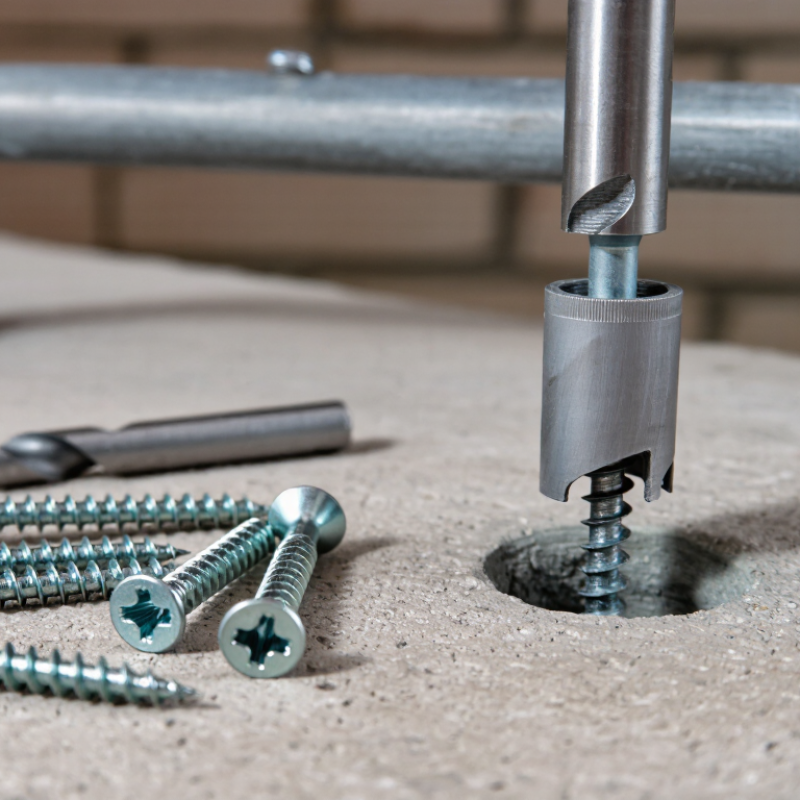
An expansion screw is a fastener designed to hold in a drilled hole, often in concrete, brick, or masonry. In common systems, the screw works with an expansion sleeve or anchor body. As the screw tightens, a cone or plug pushes the sleeve outward against the hole walls. This pressure creates a mechanical grip instead of relying only on threads biting into the material. Designs vary, so the term does not describe one universal shape. Fit matters. A suitable fastener can secure items such as brackets, rails, or equipment, but its capacity depends on both the anchor and the material around it.
Before installation, identify the base material and expected load. Concrete, hollow brick, and soft block do not behave alike. Drill the specified diameter and depth, then clear dust from the hole; debris can interfere with proper seating. Keep the anchor away from edges and cracks unless its instructions allow otherwise. Use the recommended tightening method, since overtightening may damage threads or weaken the grip. Not every wall. It is easy to blame the fastener when a crumbly surface is the real weakness. A test fit may feel reassuring, but it cannot replace a rated load limit or installation guidance.
How an Expansion Screw Anchors into a Base Material
Why Choose an Expansion Screw for Your Project?
An expansion screw anchors by turning rotational force into outward pressure inside a drilled hole. As the screw advances, its expansion section presses against the hole wall. That contact creates friction and helps resist pullout and movement. The base material matters. A screw set in sound concrete behaves differently from one installed in hollow block, cracked masonry, or weak mortar.
NRMCA’s Concrete in Practice 35 explains that concrete strength is commonly specified at 3,000 psi or higher and assessed using standard cylinder tests. That value describes a test specimen, not necessarily the concrete around a particular hole. Surface damage, voids, and nearby edges can reduce dependable holding capacity. Small details matter. Match the fastener’s approved substrate and embedment requirements to the project, and clear drilling dust before installation.
ACI 355.2 evaluates post-installed mechanical anchors through qualification tests in cracked and uncracked concrete, among other conditions. Such testing helps engineers compare anchor performance; it does not guarantee every field installation. Tightening torque, hole diameter, embedment depth, and edge distance all affect the result. It sounds simple. In practice, a slightly oversized hole or uneven tightening can change how the expansion sleeve engages. When loads are critical, use published design data and have the connection checked by a qualified professional.
Common Types and Materials of Expansion Screws
Why Choose an Expansion Screw for Your Project?
Common Types and Materials of Expansion Screws
Expansion screws grip when tightening forces a sleeve, clip, or cone against the drilled hole. Sleeve anchors suit solid concrete and some masonry, while wedge anchors provide strong expansion in concrete. Drop-in anchors sit flush inside concrete and accept threaded bolts, making them useful for overhead fixtures or removable equipment. Choose based on the base material, load direction, and whether the concrete is cracked. The wrong anchor can loosen, even when the screw itself looks robust.
Common materials include zinc-plated carbon steel, hot-dip galvanized steel, and stainless steel. The International Zinc Association reports that roughly 60% of zinc use goes to galvanizing steel, which helps resist corrosion. For damp or outdoor locations, stainless steel may be a better choice; however, grade and exposure still matter. ICC-ES AC193 evaluation reports provide product-specific load capacities and installation conditions for mechanical anchors in concrete. Check the report, rather than relying on a generic load figure. It is easy to overlook hole cleaning, but dust can affect the anchor’s grip.
Tips: Match the anchor to the substrate, then drill the specified diameter and depth. Brush and clear the hole. Tighten to the stated torque with a calibrated wrench; overtightening may damage the anchor or concrete. One detail worth reconsidering: a larger screw is not automatically a safer choice.
How to Choose and Install an Expansion Screw
Why Choose an Expansion Screw for Your Project?
How to Choose and Install an Expansion Screw
An expansion screw can secure fixtures to solid concrete or masonry by pressing against the sides of a drilled hole. Choose one suited to the wall material, fixture weight, and expected load. Check the screw’s stated size and required hole diameter; these details must match. For hollow walls or crumbly surfaces, a different fixing may be needed. A strong fastener cannot fix weak material.
Mark the hole, then drill straight to the specified depth using the recommended bit size. Wear eye protection, and clear dust from the hole so the screw can seat properly. Insert the fastener and tighten it gradually with the correct tool. Stop when the fixture feels secure; overtightening can damage the material or fastener. Check that the fixture sits flat and does not shift. Small details matter. I would still recheck the load guidance, especially for overhead fixtures.
Tips: Measure twice before drilling. Keep the drill perpendicular to the surface, and avoid enlarging the hole by rocking the bit. If the screw spins or the wall cracks, stop and reassess the hole and substrate. Guessing here can make a poor fixing worse.