
Email Id: sale@adctooling.com
A Heavy Duty Storage Cabinet offers more than extra space. It creates a stable home for tools, components, documents, and maintenance supplies. In busy workshops, loose items quickly become damaged, misplaced, or unsafe. A strong cabinet reduces that daily disorder.
Look closely at the construction. Thick steel panels, reinforced doors, adjustable shelves, and quality hinges support demanding work environments. A reliable locking system also helps control access without complicating routine use. Shelf capacity matters too. A cabinet may look powerful, yet perform poorly under uneven loads. Check its stated weight rating carefully.
Small details matter.
Experienced facility managers often consider floor space, cabinet depth, ventilation, and workflow before purchasing. A cabinet placed beside a workbench can shorten movement and reduce repeated lifting. Smooth drawers and clearly labeled shelves also improve efficiency. These practical benefits can save time across many ordinary tasks.
However, “heavy duty” is not a universal measurement. Manufacturers may describe strength differently. Buyers should compare materials, load ratings, warranty terms, and installation guidance. I have seen storage decisions focus too heavily on appearance. That is an easy mistake. A glossy finish cannot replace strong welds or dependable hardware.
The right cabinet should match the environment, stored materials, and expected use. It should remain accessible without blocking walkways. Regular inspections still matter, especially when shelves carry dense equipment. No cabinet removes every risk. Good organization requires continued attention. With careful selection, this investment can improve safety, durability, and workplace control for years.
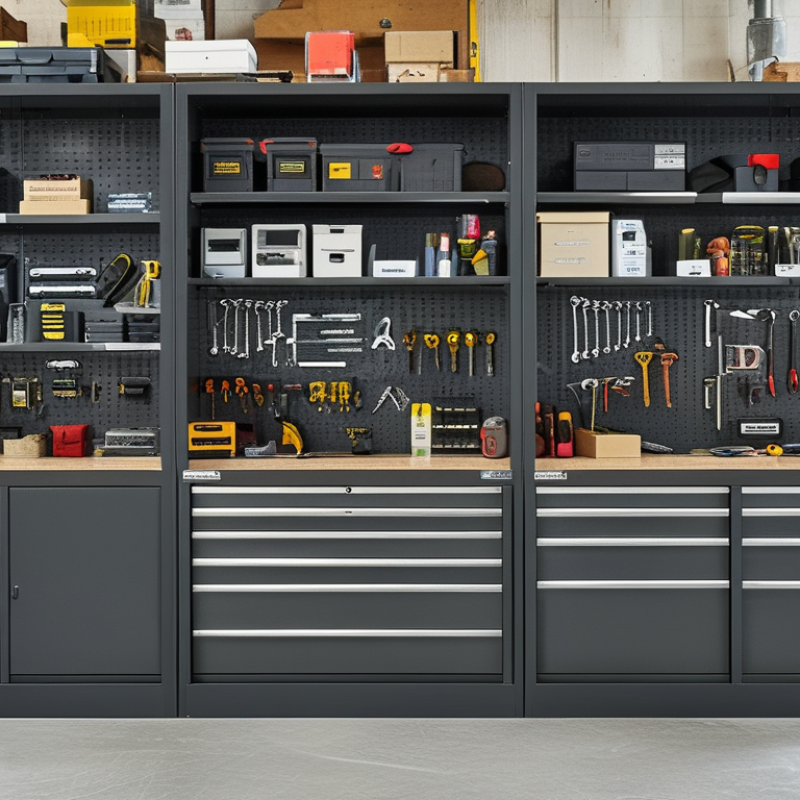
Why Choose a Heavy Duty Storage Cabinet?
What Defines a Heavy-Duty Storage Cabinet?
A heavy-duty storage cabinet is more than a thick metal box. It is engineered for demanding loads, frequent access, and long service. Key features include reinforced doors, welded frames, adjustable shelves, secure locking points, and a stable base. However, there is no universal definition of “heavy-duty.” Load ratings vary by cabinet design, shelf spacing, and installation conditions. Always check the tested capacity, not only the steel thickness.
Professional safety data shows why this matters. The 2023 Liberty Mutual Workplace Safety Index estimated that serious workplace injuries cost employers 58.5 billion dollars in direct workers’ compensation expenses during 2021. Poor storage can increase handling risks, falling-object hazards, and aisle congestion. A reliable cabinet keeps tools, components, and maintenance supplies contained. Its shelves should remain level under working loads, while doors should open smoothly without striking nearby equipment. Small details matter.
Tips: Measure the available floor area first. Then calculate the heaviest shelf load, including uneven weight. Keep dense items low. Anchor tall cabinets where site conditions require it. Review guidance from OSHA and applicable ANSI standards before installation. A cabinet may look robust, yet its weakest shelf connection can decide real performance. That is easy to overlook.
Heavy-duty construction improves a storage cabinet in ways users notice every day. A reinforced steel shell resists dents, twisting, and repeated loading. Welded joints also reduce movement when drawers open fully. In practical inspections, this matters when tools, components, or dense files shift inside. A cabinet that stays square opens more smoothly and places less stress on hinges and runners.
The 2023 U.S. Bureau of Labor Statistics Census of Fatal Occupational Injuries recorded 885 fatal falls, slips, and trips. A cabinet cannot prevent every incident, but stable construction can reduce avoidable movement. Wide bases, levelers, and properly secured units help control tipping risks. Weight ratings matter, too. They should reflect evenly distributed loads, not optimistic showroom conditions. Real storage is rarely perfect.
Thickness alone is not enough. Poor welds, weak drawer slides, or thin mounting points can undermine a heavy frame. ASTM test methods, including E8/E8M tensile testing, provide a professional basis for evaluating steel strength. However, laboratory performance does not fully reproduce years of opening, impact, dust, and uneven loading. That is where specifications need careful review. A stronger cabinet may cost more initially, yet repairs, replacement, and lost work time can quietly exceed that difference. Check the details, not just the word “heavy-duty.”
How heavy-duty construction improves strength and durability
Increasing steel panel thickness significantly improves resistance to bending. The relative bending-stiffness index is calculated using the engineering relationship t³, where t is panel thickness. For example, a 1.5 mm panel has approximately 6.6 times the bending stiffness of a 0.8 mm panel, helping heavy-duty cabinets support greater loads and maintain their shape during long-term use.
Heavy duty storage cabinets solve practical problems in busy warehouses, workshops, and maintenance rooms. Loose tools disappear under benches. Small parts collect dust. Unstable stacks also create avoidable handling risks. A steel cabinet gives these items a fixed location, protected shelves, and controlled access.
The need is measurable. The U.S. Bureau of Labor Statistics reported 4.8 recordable injury and illness cases per 100 full-time workers in transportation and warehousing during 2022. Better storage cannot remove every hazard, but it can reduce blocked aisles, falling objects, and unnecessary reaching. OSHA’s warehousing guidance also emphasizes stable stacking, clear aisles, and safe material handling. Adjustable shelves help separate heavy equipment from lightweight supplies. Lockable doors help control valuable tools and chemicals, when the cabinet is suitable for that application. A cabinet is not magic. Poor labeling still creates delays.
Tips: Measure the largest item first. Check shelf capacity, door clearance, and floor strength. Use labels at eye level. Keep heavy loads low. Review the layout after one month; real workflows often expose mistakes that planning misses. Keep inspection records, and replace damaged shelves promptly.
Why Choose a Heavy Duty Storage Cabinet?
How to Choose the Right Cabinet for Your Needs
Choosing a heavy duty storage cabinet starts with the materials, not the appearance. List each item’s weight, dimensions, frequency of use, and handling method. A cabinet rated for 800 pounds may still fail your workflow if one shelf carries most of that load. Check the capacity per shelf, total capacity, door clearance, and anchoring options. OSHA 1910.176 requires stored materials to remain secure and not create hazards. That makes stability a safety requirement, not a cosmetic feature. It should also resist daily impacts, dust, and temperature changes.
Workplace data supports careful planning. The U.S. Bureau of Labor Statistics reported 2.6 million nonfatal private-industry injuries in 2023. OSHA identifies falling objects and poor material handling as recurring workplace hazards. Select adjustable shelves for changing inventories, reinforced doors for frequent access, and lockable compartments for controlled equipment. Measure the aisle first. Then measure the cabinet.
Small details matter.
Consider corrosion protection in damp rooms. For heavy tools, steel construction and welded joints usually provide better long-term rigidity than thin folded panels. Check whether the cabinet can be leveled on uneven floors. I have seen oversized cabinets waste space while offering poor access. That mistake is easy to repeat. Review the manufacturer’s load test method, warranty terms, and installation guidance before ordering. A practical choice balances strength, access, footprint, and future storage changes.
| Selection Dimension | Recommended Specification | Why It Matters | Best Choice For |
|---|---|---|---|
| Load Capacity | Choose shelves rated for approximately 150–800 lb (68–363 kg) each, depending on the intended load. | Adequate shelf capacity helps prevent bending, cabinet deformation, and unsafe storage conditions. Always check whether the rating applies evenly distributed or concentrated loads. | Tools, spare parts, maintenance supplies, archived files, and dense industrial components. |
| Construction Material | Powder-coated steel, commonly made from cold-rolled sheet steel. | Steel provides greater resistance to impact and wear than plastic or lightweight wood. Powder coating adds a durable finish and helps protect against ordinary scratches and corrosion. | Workshops, warehouses, garages, factories, and busy commercial areas. |
| Steel Thickness | Approximately 18–24 gauge steel for general heavy-duty applications; thicker steel generally offers greater rigidity. | Gauge numbers vary by manufacturing standard, so compare actual thickness, reinforced frames, doors, and shelf construction rather than gauge alone. | High-use environments where doors, frames, and shelves may experience frequent handling. |
| Adjustable Shelves | Prefer shelves adjustable in increments of about 1–2 inches (25–50 mm), with secure shelf supports. | Adjustability allows the cabinet to accommodate containers, equipment, and materials of different heights while reducing wasted vertical space. | Mixed inventory, changing storage requirements, and facilities with varied equipment. |
| Cabinet Dimensions | Common full-height formats are approximately 72–78 inches (183–198 cm) high and 36–48 inches (91–122 cm) wide. | The cabinet should provide useful capacity without blocking walkways, emergency exits, electrical panels, or ventilation paths. Measure doorways and installation areas first. | Warehouses, utility rooms, maintenance departments, and professional workshops. |
| Door Configuration | Choose solid, sliding, or glass-panel doors according to visibility and available clearance. | Solid doors improve visual concealment and protect contents from dust. Glass panels make inventory checks easier. Sliding doors are useful where swing clearance is limited. | Solid doors: secure storage; glass doors: visible inventory; sliding doors: narrow aisles. |
| Locking System | Use a keyed, electronic, or handle-operated lock when access control is required. | A lock helps limit unauthorized access and supports organized storage of tools, documents, or controlled materials. It is not a substitute for a certified fire or security safe. | Shared workplaces, offices, maintenance areas, and restricted-access storage. |
| Mobility | Use fixed leveling feet for maximum stability or heavy-duty casters when the cabinet must be repositioned. | Casters improve flexibility but can reduce stability if the cabinet is overloaded or placed on an uneven surface. Locking casters and anti-tip features are recommended for mobile units. | Fixed feet: permanent storage; casters: workshops, laboratories, and flexible work areas. |
| Safety and Stability | Look for a reinforced frame, anti-tip design, secure shelf retention, and floor or wall anchoring provisions. | Heavy items can raise the center of gravity. Proper anchoring and balanced loading reduce the risk of tipping, especially when drawers or doors are opened. | Tall cabinets, high-density storage, seismic areas, and locations with frequent access. |
| Environmental Protection | For ordinary indoor use, select a corrosion-resistant finish. For damp or corrosive areas, verify suitability for the specific environment. | Humidity, chemicals, salt air, and temperature changes can accelerate corrosion. A standard powder-coated finish may not be sufficient for severe exposure. | Indoor workshops: standard coating; humid or chemical areas: specialized corrosion protection. |
| Fire Protection | Choose a separately tested and certified fire-resistant cabinet when fire protection is required. | A standard heavy-duty steel cabinet offers impact resistance but should not be assumed to protect paper, electronics, or hazardous materials from fire. | Fire-sensitive documents, electronic media, flammable liquids, or regulated materials requiring certified storage. |
| Organization Features | Consider drawer inserts, bins, label holders, perforated panels, or modular accessories. | Organized interiors reduce search time, improve stock visibility, and help maintain consistent storage procedures. | Small parts, hand tools, maintenance supplies, inventory control, and shared workstations. |
| Maintenance Requirements | Inspect shelves, hinges, locks, fasteners, caster brakes, and anchor points periodically. | Routine inspection helps identify overloading, corrosion, loose hardware, and damaged components before they become safety problems. | All heavy-duty cabinets, particularly those used daily or exposed to vibration and dust. |
| Best Overall Choice | A powder-coated steel cabinet with adjustable shelves, a tested load rating, secure locking, anti-tip protection, and suitable anchoring provisions. | This combination balances durability, capacity, organization, security, and long-term workplace safety for most general storage requirements. | General-purpose industrial, commercial, workshop, and facility storage. |
Note: Load capacities, dimensions, and safety features vary by cabinet design. Confirm the manufacturer’s technical specifications and applicable local safety requirements before purchase.
Why Choose a Heavy Duty Storage Cabinet?
Where Heavy-Duty Storage Cabinets Are Commonly Used
Heavy-duty storage cabinets are common in warehouses, workshops, laboratories, hospitals, and maintenance rooms. They protect tools, components, records, and equipment from dust, impact, and daily handling. In a busy warehouse, steel shelving may hold cartons, while enclosed cabinets secure small parts and measuring instruments. This separation reduces misplaced items and makes routine inspections easier.
The U.S. Bureau of Labor Statistics reported a 4.4 recordable-injury rate per 100 full-time workers in transportation and warehousing during 2023. That figure supports better organization, although a cabinet cannot solve every safety problem. Clear labels, stable loading, and unobstructed aisles still matter. A poorly planned cabinet can create congestion instead.
Manufacturing plants often place these cabinets beside assembly lines for jigs, hand tools, and replacement parts. Laboratories use them for controlled supplies and frequently handled equipment. Hospitals may install them in service areas for linens, instruments, and packaged materials, following local hygiene procedures. The 2024 Global Warehousing Benchmarking Survey from the Warehousing Education and Research Council highlights inventory accuracy and space utilization as continuing operational priorities. Cabinets help with both, but only when locations match actual workflow. Workers should not cross an entire facility for one commonly used wrench. That small design mistake is easy to miss.